
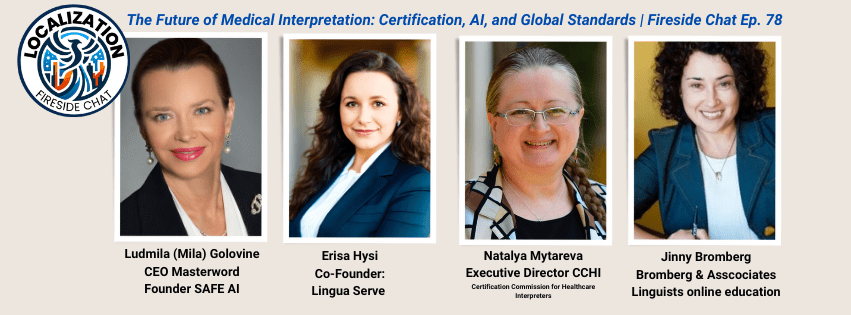
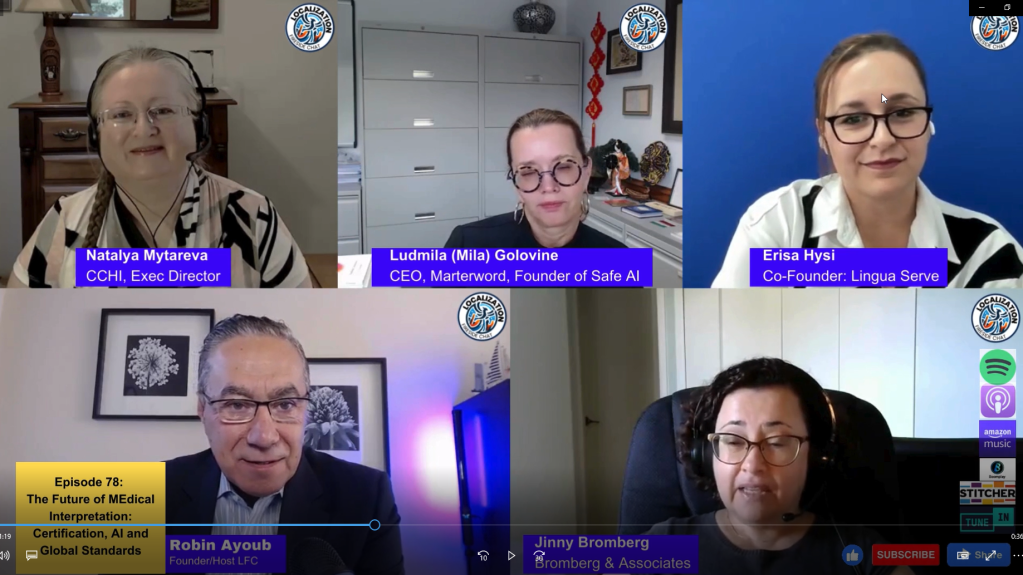
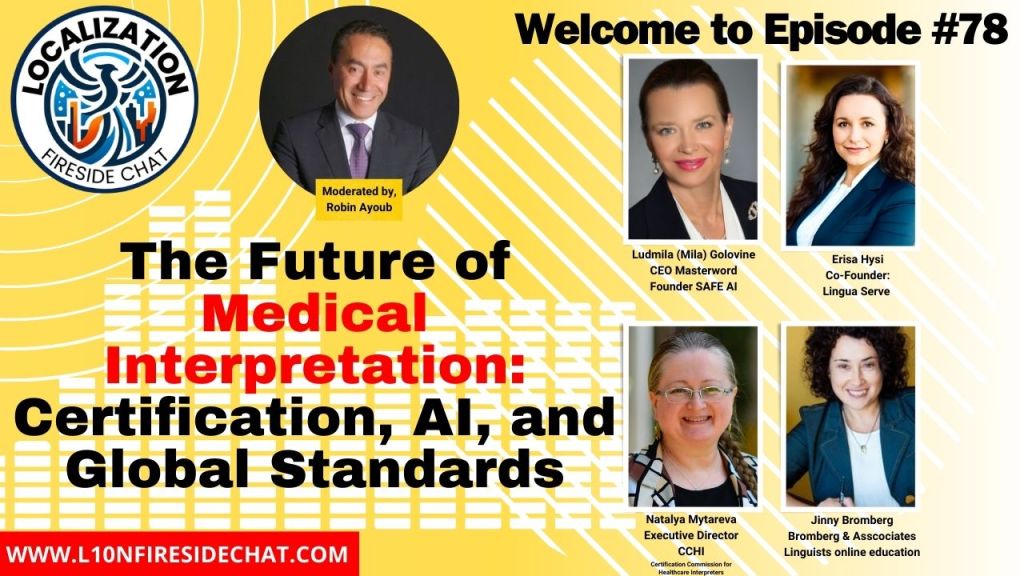
Introduction: In a recent episode of the Localization Fireside Chat, industry leaders gathered to discuss the critical role of medical interpretation in healthcare. The conversation, featuring Natalia Mytareva from the Certification Commission for Healthcare Interpreters (CCHI), Jinny Bromberg from Bromberg & Associates, Erisa Hysi from Linguist Survey, and Mila Golovine from Master Word, delved into the nuances of medical interpretation, emphasizing the importance of certification, the challenges of maintaining quality standards, and the evolving role of technology in the field. This blog post summarizes their insightful discussion, highlighting key takeaways and the future direction of medical interpretation.

The Expansive Scope of Medical Interpretation: The discussion began by exploring the broad scope of medical interpretation, underscoring its crucial role across various healthcare specialties. Natalia Mytareva highlighted that medical interpretation is not limited to general healthcare interactions but extends to specialized fields such as mental health, dental care, and physical therapy. This wide-ranging application necessitates a high level of expertise and professionalism, which is why certification is so important. Natalia emphasized that certification ensures interpreters meet a consistent standard of quality, thereby enhancing the credibility and reliability of the profession.
Jinny Bromberg further elaborated on the strides made in the recognition of medical interpretation as a professional field. She acknowledged the progress in training and certification but noted that much work remains to be done to raise awareness among healthcare providers about the importance of using qualified interpreters. The panelists agreed that ongoing professional development and certification are essential to maintaining and elevating the standards of medical interpretation.

The Mechanics of Providing Interpretation Services: The panelists then turned their attention to the mechanics of providing interpretation services, focusing on how these services are organized, who bears the cost, and how interpreters are engaged. In the United States, healthcare providers are legally obligated to offer language access services to patients, ensuring that non-English speakers receive the same level of care as English-speaking patients. This legal requirement underscores the importance of medical interpretation in safeguarding patient safety and ensuring equitable access to healthcare.
The panelists discussed the different types of interpreters—staff interpreters, on-call interpreters, and freelance interpreters—each of whom operates under unique work arrangements. Staff interpreters typically work within healthcare facilities and are salaried employees, while freelance interpreters may work for multiple clients and are often paid per assignment. On-call interpreters offer flexibility, providing services as needed, which is particularly useful in situations requiring immediate or emergency interpretation. Regardless of their employment status, the panelists emphasized the importance of maintaining high standards of quality and professionalism across all interpreter roles.
Navigating Competition and Establishing Fair Rates: In a field as essential as medical interpretation, maintaining fair rates and resisting the temptation to engage in price wars is crucial. The panelists stressed that while competition is inevitable, it should not come at the cost of quality. Jinny Bromberg pointed out that a “race to the bottom” in pricing can undermine the entire profession, leading to lower standards and potentially jeopardizing patient care. Instead, she advocated for companies to stand firm in their commitment to fair compensation for interpreters, ensuring that quality remains the top priority.
The discussion also revealed that there is no standardized national guide for rates in the medical interpretation industry. Instead, rates are often determined by the individual companies and interpreters, taking into account factors such as regional cost of living, language pair demand, and the complexity of the assignments. The panelists agreed that while pricing is important, the focus should remain on delivering high-quality services that reflect the expertise and value of professional interpreters.
The Intersection of Liability and Technology: As the conversation progressed, the panelists addressed the issue of liability protection and the growing role of artificial intelligence (AI) in the industry. They unanimously agreed on the importance of carrying adequate insurance and implementing rigorous vetting processes to minimize risks. Mila Golovine emphasized that while AI has its place in automating certain business processes, such as invoice processing, it cannot replace the nuanced and context-sensitive expertise of a human interpreter.
Natalia Mytareva added that the stringent regulations and laws governing the medical field make it unlikely for AI to fully replace human interpreters, particularly in critical healthcare settings where accuracy and accountability are paramount. The ethical considerations surrounding AI were also discussed, with the panelists highlighting the need for human oversight to ensure that communication remains clear, accurate, and culturally appropriate.
Conclusion: The panel discussion provided a comprehensive overview of the current state and future of medical interpretation, emphasizing the vital role interpreters play in bridging language gaps in healthcare. The experts underscored the importance of professionalism, certification, and ongoing training in maintaining high standards within the field. They also highlighted the need for fair compensation and the ethical implications of integrating AI into the profession.
As the demand for language access services continues to grow, the collaboration between healthcare organizations and interpreters will be crucial in ensuring that patients from diverse linguistic backgrounds receive the highest standard of care. The insights shared by the panelists serve as a reminder of the importance of medical interpretation in saving lives and fostering effective communication in healthcare settings.
Until next time this is Robin Ayoub signing off


 Robin Ayoub
Leave a comment