

A Conversation with Adil Husain, CEO of Emerging Strategy
The global business landscape is shifting faster than ever. With tariffs, regulations, and AI reshaping how companies expand internationally, businesses need reliable insights to navigate uncertainty. In the latest episode of the Localization Fireside Chat, host Robin Ayoub (LinkedIn) sat down with Adil Husain, CEO of Emerging Strategy (LinkedIn), to explore how companies can mitigate risk, leverage AI, and thrive in international markets.
Watch the full episode here: https://youtu.be/HTC58pDyM7A
For those who prefer audio, listen on Spotify: https://open.spotify.com/episode/5Cseb4zQpJCSaQ4elmvzy6?si=4147d07030ad4d3e
Or on Apple Podcasts: https://podcasts.apple.com/us/podcast/navigating-international-business-tariffs-risks-market/id1688770183?i=1000695567566
Understanding the Global Business Landscape
With over 20 years of experience, Adil Husain has worked with Fortune 1000 companies and fast-growing startups, helping them understand market intelligence and identify global expansion opportunities. Emerging Strategy started with a focus on East Asia and China, evolving into a fully virtual “micro-multinational” company spanning 14 time zones.
“We help companies make informed decisions about where to play and how to win,” Adil explained. “Some of our biggest contributions aren’t just helping companies make money—but also helping them avoid costly mistakes.”
Robin Ayoub (LinkedIn) emphasized how global businesses can no longer rely on gut feelings:
“The days of calling a few friends and making a business decision are long gone. Today, everything revolves around data-driven insights.”
The Impact of Tariffs and Global Uncertainty
One of the most pressing challenges businesses face today is the uncertainty surrounding tariffs and global trade policies.
“Companies are resilient when they have clarity,” Adil noted. “The problem is when tariffs are announced one day and changed the next. Businesses don’t like uncertainty.”
Robin expanded on this idea, referencing his own experience in the localization industry:
“If businesses don’t fully understand the regulatory environment before expanding, they expose themselves to unnecessary risks and financial losses.”
Listen to the full discussion on Spotify: https://open.spotify.com/episode/5Cseb4zQpJCSaQ4elmvzy6?si=4147d07030ad4d3e
The Balance Between Standardization & Localization
Companies looking to expand globally must find a balance between standardizing their core offerings while adapting to local markets.
Adil introduced the 70/30 rule:
- 70% Standardization: Keeping brand identity, core product, and business model consistent across markets.
- 30% Localization: Adjusting pricing, marketing, customer experience, and sometimes even the product itself.
A great example? Netflix’s strategy in India.
“When Netflix entered India in 2016, they struggled because they used their North American pricing model,” Adil said. “It wasn’t until they launched a $3 per month mobile-only plan that they saw a 60% growth in subscribers.”
Robin agreed, adding that localizing pricing and business models is essential for success:
“Companies that assume ‘what works at home will work abroad’ often fail. The most successful businesses aren’t necessarily the biggest—they’re the fastest learners.”
Watch the full conversation on YouTube: https://youtu.be/HTC58pDyM7A
The Role of AI in Market Research
AI is revolutionizing how businesses gather insights about international markets.
“AI can track regulatory updates across multiple countries in seconds,” Adil explained. “Before, this required huge analyst teams. Now, AI does the heavy lifting, and humans interpret the data.”
However, AI isn’t replacing human expertise anytime soon.
“Until AI becomes our customer,” Adil joked, “we still need real people to provide business insights and decision-making.”
Robin, a recognized AI expert, echoed these thoughts:
“AI speeds up the process, but humans are still needed to verify and contextualize the data. We’re not at a point where AI can fully replace business intelligence experts.”
For a deeper dive into AI and business intelligence, listen to the full podcast on Apple Podcasts: https://podcasts.apple.com/us/podcast/navigating-international-business-tariffs-risks-market/id1688770183?i=1000695567566
Emerging Markets: Where is the Growth?
Despite global economic challenges, Adil remains optimistic about emerging markets.
“Countries moving up the income ladder see increased spending on health, education, and consumer goods,” he noted. “There’s huge untapped potential in markets like Southeast Asia, Africa, and Latin America.”
However, conflict zones create risk.
“Businesses look at risk-adjusted returns,” Adil said. “If the upside outweighs the geopolitical risks, companies will still invest.”
Final Advice for Businesses Expanding Internationally
Robin asked Adil for one piece of advice for companies entering new markets.
“Be adaptable. The best global businesses aren’t the biggest, they’re the fastest learners.”
He pointed to Amazon’s success in India vs. Walmart’s struggle, reinforcing the idea that localized strategies win in the long run.
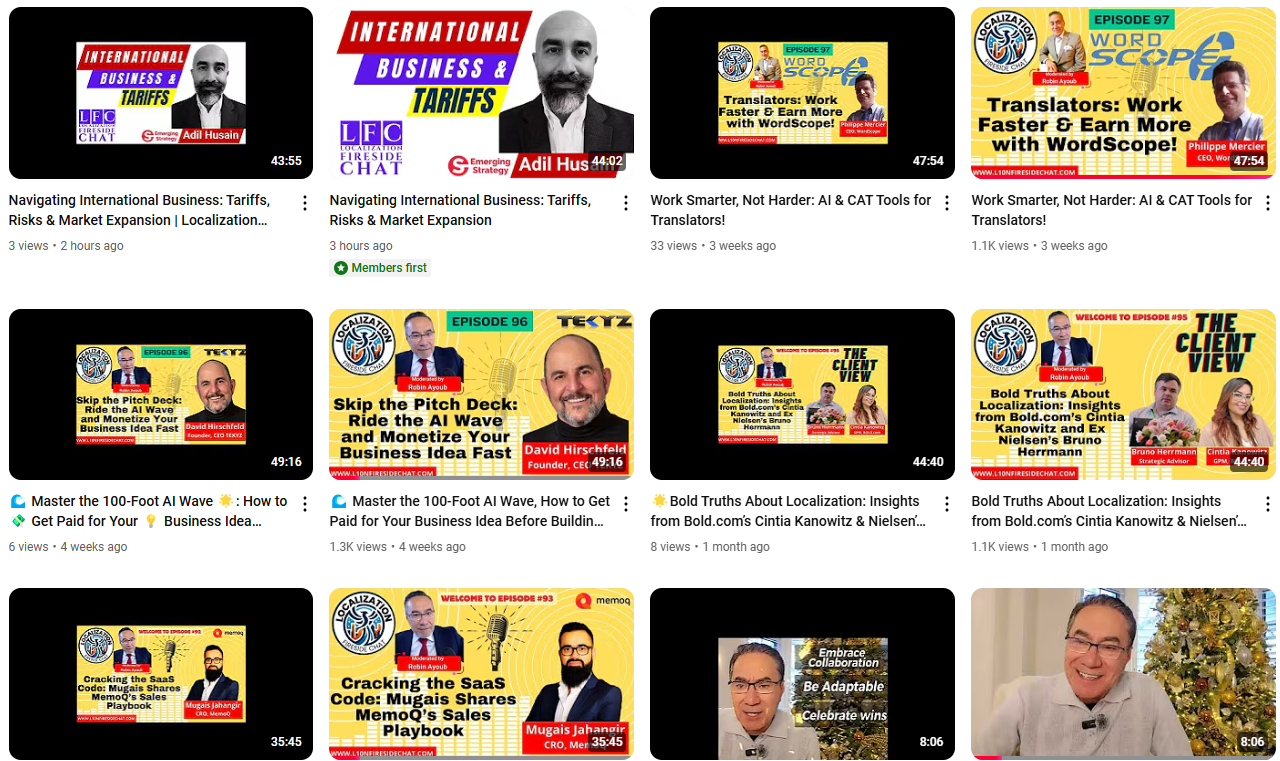
Watch & Listen to the Full Episode
For an in-depth look at international business strategies, watch or listen here:
📺 YouTube: https://youtu.be/HTC58pDyM7A
🎧 Spotify: https://open.spotify.com/episode/5Cseb4zQpJCSaQ4elmvzy6?si=4147d07030ad4d3e
🍏 Apple Podcasts: https://podcasts.apple.com/us/podcast/navigating-international-business-tariffs-risks-market/id1688770183?i=1000695567566
🔗 Connect with:
What are your thoughts on global expansion, tariffs, and AI in business? Share in the comments or reach out on LinkedIn!
Until next time this is Robin Ayoub signing off

 Robin Ayoub
Leave a comment