
The AI Revolution in Translation: A Tipping Point?
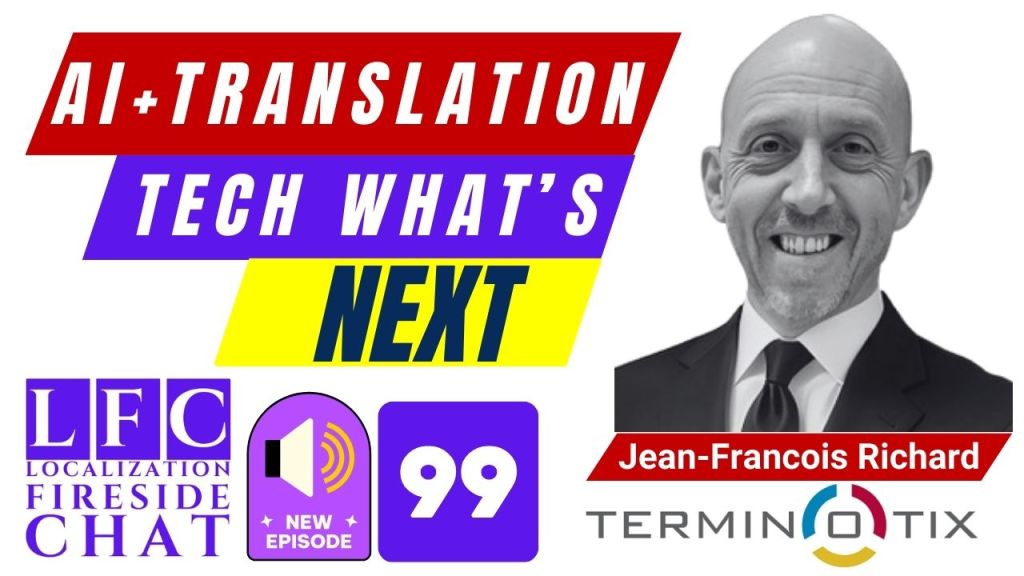
Artificial Intelligence is no longer a futuristic vision for the translation industry; it is a present-day reality, shaping workflows, efficiency, and expectations. But where is it leading us? In Episode 99 of the Localization Fireside Chat, I had the pleasure of sitting down with Jean-François Richard, CEO of Terminotix, to explore the evolution of translation technology, the challenges AI presents, and the road ahead. With over 40 years in the industry, Jean-François has a front-row seat to the shifts that are redefining how we translate, and his insights into AI’s role in translation technology are both timely and thought-provoking.

A Journey from Typewriters to AI-Powered Solutions
But despite these advancements, the industry faces an ongoing dilemma: is AI a disruptive force that will replace human translators, or an enhancement tool that enables them to work more efficiently?

AI in Translation: Friend or Foe?
AI is a double-edged sword. On one hand, it offers incredible efficiencies in speed and accuracy, but on the other, it raises concerns about quality, context retention, and job displacement. Jean-François introduced TAIGR, a solution that builds upon AI but circumvents some of its known inefficiencies, particularly in retrieval-augmented generation (RAG). Traditional AI-driven translation tools often struggle with slow inference times and a heavy reliance on large datasets. By optimizing retrieval methods and integrating cached augmented generation, TAIGR significantly improves the accuracy and reliability of AI-generated translations.
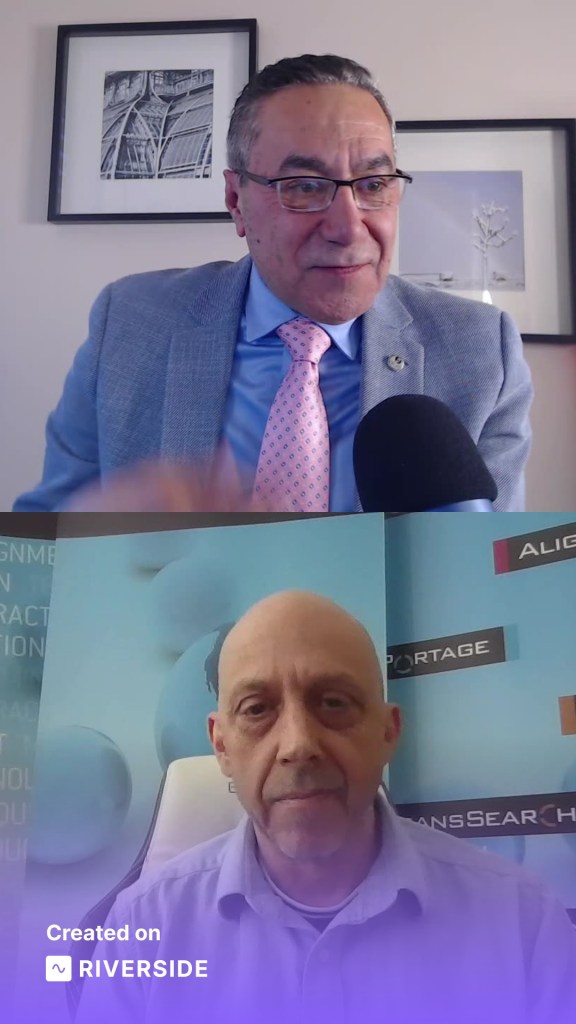
While some translators fear AI as a replacement, Jean-François argues that the real goal should be reducing post-editing frustration rather than eliminating human expertise. AI, when implemented correctly, should support translators by improving searchability, reducing redundancy, and enabling more contextual accuracy.
Modularization & On-Premise Solutions: A Game-Changer?
One of Terminotix’s unique approaches is its modular design, allowing organizations to purchase only the tools they need rather than committing to an all-in-one suite. This flexibility is particularly appealing in industries with stringent security and compliance requirements, such as government agencies, pharmaceutical companies, and financial institutions.
Jean-François emphasized the growing demand for on-premise AI-powered translation solutions, citing cybersecurity as a primary concern. Many organizations hesitate to adopt cloud-based AI due to fears of data leaks, making Terminotix’s ability to deploy AI behind corporate firewalls a major advantage. The ability to integrate AI while maintaining data sovereignty is a compelling selling point for enterprises looking to modernize without compromising security.
What Does the Future Hold for AI in Translation?
Will AI eventually replace human translators? Or will it serve as an intelligent assistant, filling gaps and automating repetitive tasks? Jean-François believes that the future lies in context-aware AI that doesn’t just translate words, but understands meaning, intent, and domain-specific nuances.
He foresees a future where AI-driven translation solutions are deeply integrated with terminology management systems, search tools, and real-time adaptive translation engines that learn from user preferences without requiring extensive post-editing. The fourth wave of machine translation, which TAIGR represents, moves beyond traditional neural machine translation (NMT) to a model where AI dynamically adjusts its output based on the latest corpus data.

Critical Thinking: Are We Ready for This Future?
AI in translation is not about elimination, but adaptation. Language professionals who embrace AI as a tool rather than a threat will be better positioned to navigate this changing landscape. The industry must also address ethical concerns, pricing structures, and the value of human expertise in an increasingly automated world.
What do you think? Are we moving toward a future where AI truly understands language like a human, or will professional translators always have the final word? Let us know your thoughts in the comments, and don’t forget to check out Episode 99 of the Localization Fireside Chat for the full conversation.
If you’re interested in learning more about Terminotix’s solutions or want to explore how AI can enhance your translation workflow, connect with Jean-François Richard on LinkedIn or visit the Terminotix website.
Stay Connected with Us!
📺 Watch the full interview on YouTube: https://youtu.be/4zhYF82TMdM
🎙️ Listen to the podcast episode: https://rss.com/podcasts/l10nfiresidechat
Like, comment, and share! Let’s keep the conversation going on the future of AI in translation.
See you at the next episode!
Robin Ayoub

 Robin Ayoub
Leave a comment