Introduction:
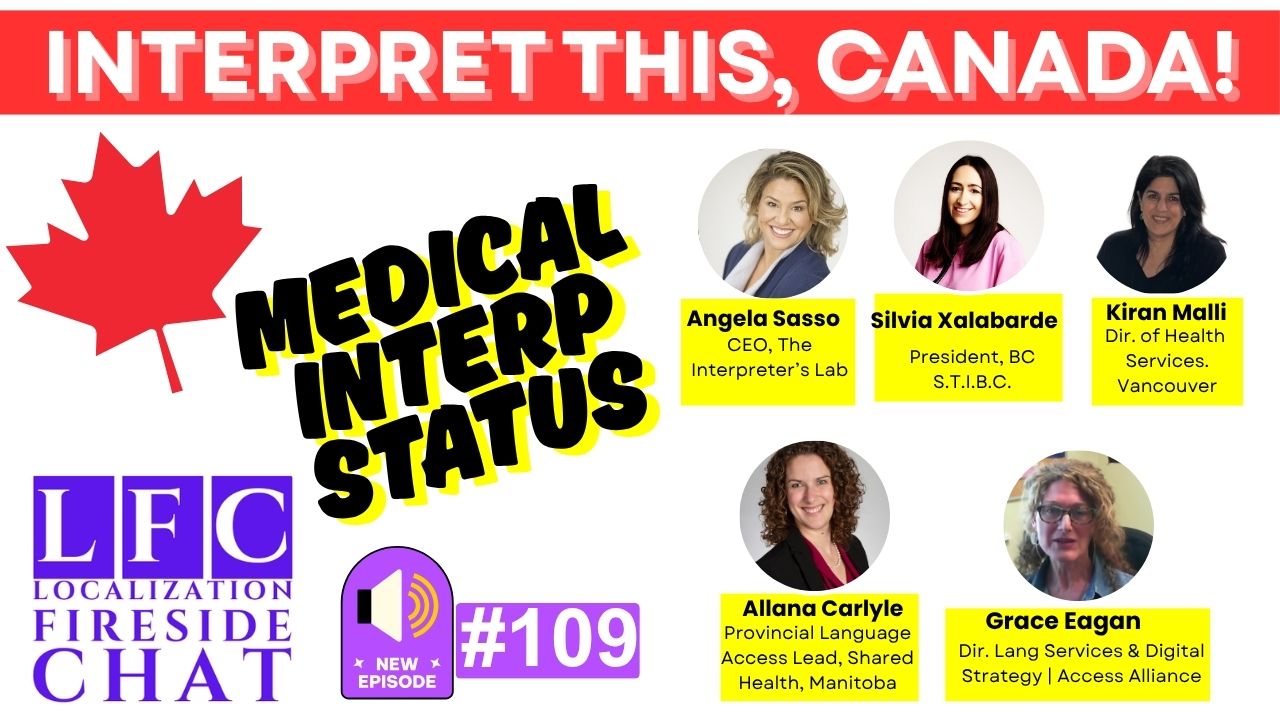
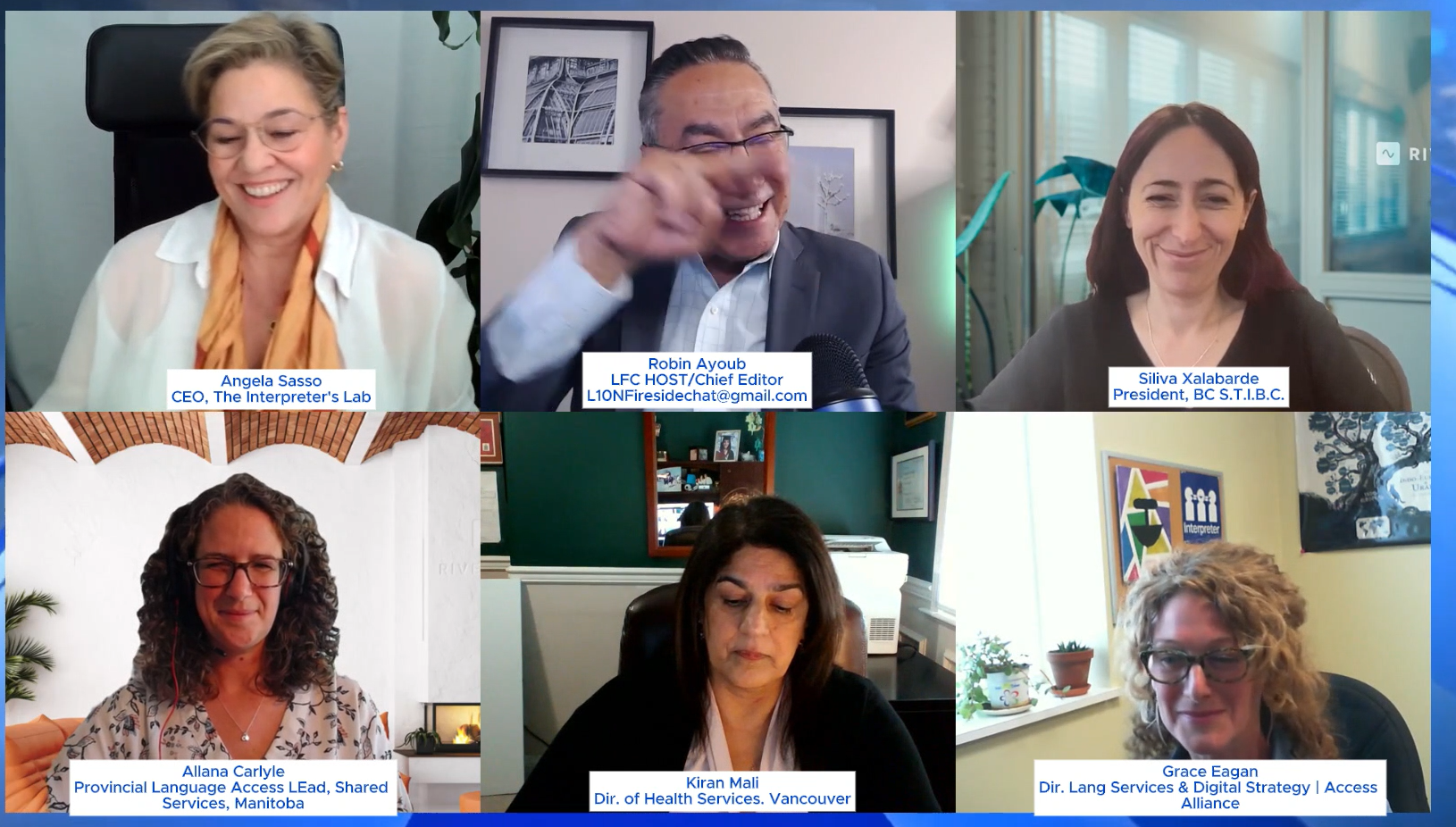
What happens when language rights are guaranteed by law but access fails in practice? In Episode 109 of the Localization Fireside Chat, Robin Ayoub brings together five leading voices from across Canada to explore the state of medical and community interpretation. The guests—Angela Sasso (Interpreter’s Lab), Silvia Xalabarde (STIBC), Kiran Malli (Vancouver Coastal Health), Allana Carlyle (Shared Health Manitoba), and Grace Eagan (Access Alliance)—share powerful frontline insights about a system that is overstretched, undervalued, and far from equitable.
Interpretation is often treated as a logistics issue, but this episode reveals it for what it truly is: a matter of public safety, dignity, and human rights. From the gaps in national standards to the emotional burden carried by interpreters, this conversation gets real about what’s broken and what needs fixing. If you work in language services, healthcare, or policy, this is a conversation you can’t afford to miss.

📌 Chapters (Time Stamps):
0:00 – Welcome & Episode Setup
2:45 – Meet the Panel: 5 Voices from Across Canada
6:30 – What’s Broken: From Booth to Policy
15:20 – Training, Credentials & Systemic Gaps
23:40 – Frontline Challenges in Healthcare
32:55 – Budgeting for Equity
45:10 – What Needs to Happen Now
56:30 – Final Thoughts & What’s Next
Interpreting in Crisis: A Fragmented System
Canada is proudly bilingual on paper, but in practice, language access is far more complex. Across provinces, there is no unified national standard for interpreter training, service delivery, or credentialing. The result is a fragmented system where outcomes vary wildly depending on geography, budget, and political will.
“We’ve got a patchwork,” says Angela Sasso. “And when systems are inconsistent, people fall through the cracks.” The cracks, in this case, are real patients, immigrants, refugees, and non-English speakers, who may be navigating medical emergencies, legal hearings, or trauma without proper language support.
What’s especially striking is the disconnect between policy and implementation. Despite existing legal mandates around language rights, service delivery often relies on outdated models or overworked, under-supported professionals. As Silvia Xalabarde puts it, “Mandates are only as good as the funding and infrastructure behind them.”
Community Interpreters: The Emotional Frontline
One of the most powerful themes in the episode is the emotional labor involved in community interpreting. Unlike conference interpreters working in technical or political settings, community interpreters often work with vulnerable populations. That means being present in moments of birth, death, abuse, diagnosis, and more.
“Interpreters carry an invisible weight,” says Kiran Malli. “You’re not just translating words. You’re holding space for people’s lived experiences.” This emotional intensity is rarely acknowledged by institutions and seldom supported with structured debriefs or mental health resources.
Grace Eagan adds that the lack of recognition is systemic. “We’re not just linguists. We’re culture brokers, advocates, and in some cases, lifelines. But the system doesn’t see it that way.”
Standardization, Accountability, and the Path Forward
The panel agrees on one thing: Canada needs a unified, national approach to interpreting. This means standardized training, national credentialing, and funding models that recognize the value of interpretation as a professional service, rather than an afterthought.
Allana Carlyle makes a compelling case for what this could look like. “We need to build systems that reflect the realities of the communities we serve. That starts with involving interpreters in the conversation, not just policy makers.”
The conversation also highlights the urgent need for investment. Without sustainable funding, interpreter burnout will continue, turnover will increase, and quality of care will decline. The stakes are higher than ever. As Angela Sasso says, “Language access is not a nice-to-have. It’s a necessity.”
This episode doesn’t just criticize. It offers a roadmap for improvement, from building trauma-informed interpreter programs to leveraging data for better service design. There’s a growing consensus that the current model is unsustainable, and now is the time for reform.
Conclusion:
Episode 109 is a wake-up call for Canada’s language access ecosystem. It shows us that while the legal foundation may exist, the infrastructure, respect, and accountability still lag far behind. If we’re serious about equity, health outcomes, and inclusive public service, interpretation must be treated as essential, not optional.
What stood out most in this conversation was the human lens. Behind every interpreted conversation is a real person navigating vulnerability. It’s time Canada’s interpreting system rose to meet that reality.
What’s your take? Does your region have a strong interpretation framework, or is it also patchwork? Share your thoughts in the comments.
👉 Watch the full interview here:
https://youtu.be/SHNi9RScTds
Connect With Us:
🎙 Subscribe to the Localization Fireside Chat Podcast:
Spotify: https://open.spotify.com/show/5OoURgc29R31XPGzOWL9iX
Apple Podcasts: https://podcasts.apple.com/us/podcast/localization-fireside-chat/id1688770183
🌎 Explore the Blog:
https://www.robinayoub.blog
📩 Stay in Touch:
LinkedIn: https://www.linkedin.com/in/robinayoub/
Email: rsayoub@gmail.com
 Robin Ayoub
Leave a comment