Most leadership failure is not a character problem.
It’s a training problem.
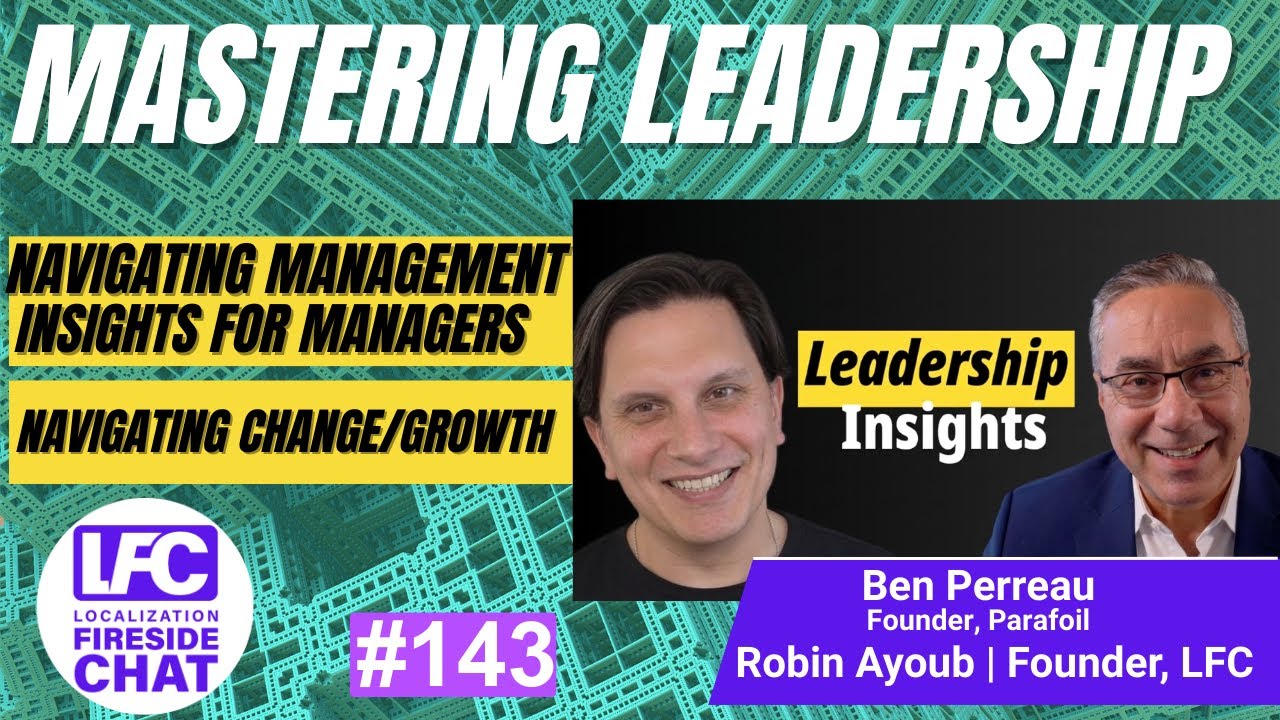
In this episode of Localization Fireside Chat, I sat down with Ben Perreau to talk about what is quietly becoming one of the biggest organizational risks in modern business: managers who end up leading by accident.
Ben’s path into leadership is unconventional and that is exactly why it works. He started as a music journalist, then transitioned into working with senior leaders, including Fortune 50 C-suite teams, where he saw the same pattern repeating across industries.
Companies promote high performers into management and then act surprised when leadership performance collapses.
Ben cites a stat from the Chartered Institute of Managers that should make every executive pause: 82% of managers describe themselves as accidental managers
blog-post
. People are handed a title and a team, but not the operating system to lead.
The impact is predictable.
Managers feel overwhelmed.
Teams feel unsupported.
Culture erodes.
Execution slows.
Attrition rises.
Ben’s core point is simple and sharp.
Leadership is a skill, not a promotion.
And like any skill, it improves faster with tight feedback loops.
He shares his own experience as a younger manager, waiting for annual reviews to get performance feedback, only to be blindsided by what he should have been learning in real time. That is the structural problem in most organizations: the feedback cycle is too slow to shape leadership behavior while it still matters
blog-post
.
That gap is what led Ben to build Parafoil.
He describes Parafoil as an instrumentation layer for leadership, similar to the way pilots use telemetry and instrumentation to improve precision and safety. The idea is that managers should not have to guess how they are doing. They should be able to see it, learn from it, and improve daily
blog-post
.
Parafoil analyzes conversations with team members and translates them into actionable coaching signals. Not generic advice. Real feedback tied to real interactions.
This matters even more now because leadership is getting harder.
Remote work, hybrid teams, and post-pandemic organizational fatigue have created a reality where managers are expected to carry bigger teams with less context, less face time, and more complexity. Most organizations have not adapted their leadership development models to match that reality
blog-post
.
Ben also makes a point that many companies still avoid saying out loud.
Not everyone should be a manager.
Some people want to lead. Some people do not. And forcing technical experts into people leadership just to reward them is a broken incentive. Organizations need alternative advancement paths for individual contributors, so leadership roles are filled by people who actually want the responsibility and have support to develop the skills
blog-post
.
This episode is a call to executives to stop treating leadership as a title and start treating it like a capability that needs instrumentation, coaching, and practice.
Because the cost of accidental leadership is not abstract.
It shows up in culture.
It shows up in execution.
It shows up in retention.
It shows up in performance.
And it is fixable.
Watch the full conversation
Localization Fireside Chat
Unscripted. Unbiased. Unfiltered.
https://www.l10nfiresidechat.com
 Robin Ayoub
Leave a comment