Certified translation is one of the last corners of the language industry still operating on manual workflows, PDFs, email chains, and human bottlenecks. While AI and automation have transformed many areas of localization, certified translation has remained largely untouched. Not because the technology does not exist, but because the constraints are different.
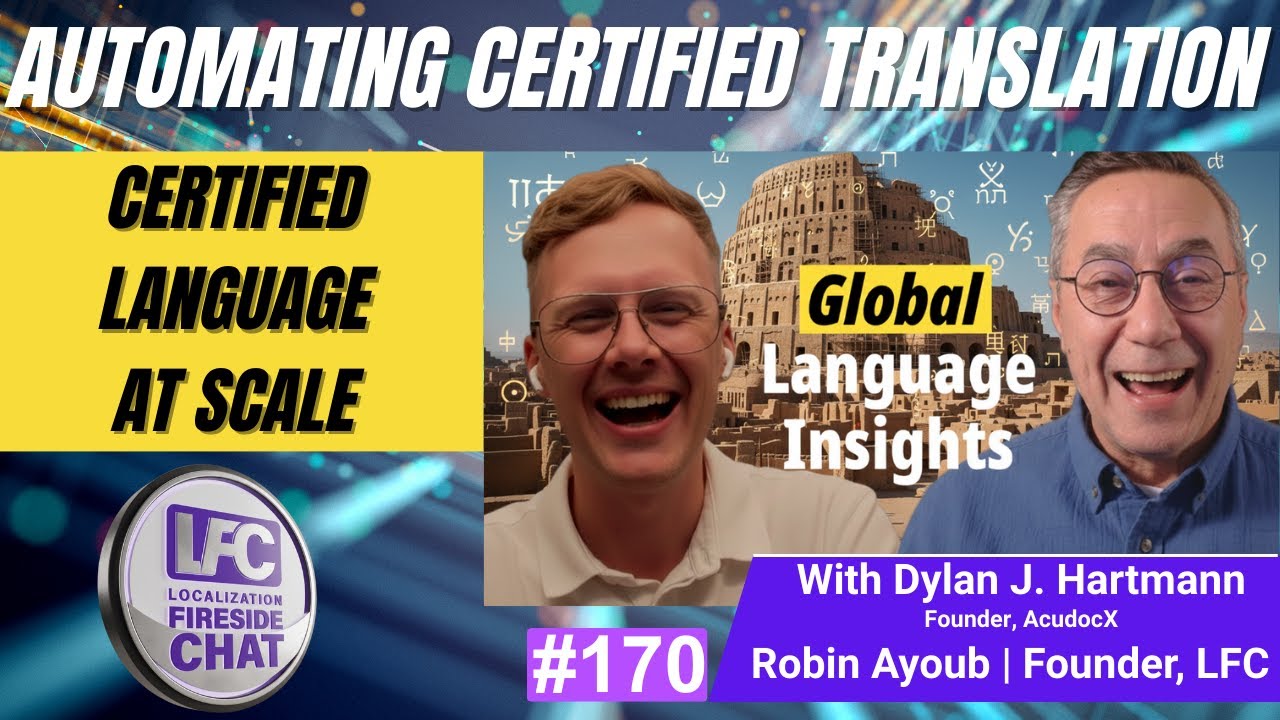
In Episode 170 of the Localization Fireside Chat, Robin Ayoub speaks with Dylan J. Hartmann, Founder of AcudocX, about why certified translation has resisted automation for so long and what it actually takes to modernize it without compromising trust, compliance, or accountability.
Dylan brings a rare perspective to the conversation. He did not enter the space as a technologist looking for a problem. He started as a certified translator, working inside the very workflows that most technology vendors try to disrupt from the outside. That lived experience shaped AcudocX into something fundamentally different from traditional translation tools.
This conversation moves past surface-level AI narratives and focuses on systems, structure, and responsibility.
Why Certified Translation Is Different
Certified translation lives at the intersection of language, law, and liability. Immigration, legal proceedings, notarization, and government use cases all demand accuracy, traceability, and human accountability. These requirements make simple automation insufficient and, in many cases, dangerous.
As Dylan explains, most translation technology fails in this space because it treats certified translation like any other content flow problem. It is not. The challenge is not speed alone. It is how responsibility is assigned, verified, and documented at scale.
This is why certified translation has continued to rely on manual processes long after other parts of the industry have modernized.
Automation Without Removing Accountability
A central theme of the episode is the role of AI in certified translation. Rather than framing AI as a replacement for human expertise, Dylan positions it as a support layer. AI can accelerate intake, improve document handling, and reduce friction. But certification still requires a human decision and a human signature.
AcudocX is built around this principle. The platform does not attempt to remove the certified translator from the process. Instead, it restructures the workflow so that human judgment is applied where it matters most, while repetitive and administrative tasks are handled by the system.
This human-in-the-loop approach is not a compromise. It is a requirement for trust.
Treating Language as Infrastructure
One of the most important insights from the conversation is the idea of certified language as infrastructure. Instead of building another tool or marketplace, AcudocX functions as backend plumbing. It connects documents, translators, verification steps, and delivery into a system that can scale without collapsing under its own complexity.
This infrastructure mindset also explains why the platform serves both individual consumers and language service providers. It is not competing with translators or agencies. It is enabling them to operate more efficiently and with greater consistency.
Dylan describes this simply. AcudocX is not the front of the house. It is the backend that makes certified translation work at scale.
Market Reality and What Comes Next
The episode also addresses broader market trends, including shifting demand, increased scrutiny around AI claims, and the growing need for systems that can withstand regulatory pressure. Certified translation is not immune to these forces. If anything, it is feeling them more acutely.
What becomes clear is that the future of certified translation will not be defined by flashy AI demos. It will be defined by platforms that respect the realities of compliance, human responsibility, and trust, while still delivering speed and scale.
That is the real work ahead.
Final Thoughts
This episode is a grounded, operator-level conversation about where certified translation stands today and what it will take to move it forward responsibly. It is not about hype. It is about structure.
If you work in localization, language services, or any regulated content environment, this is a conversation worth paying attention to.
Listen to the Episode
Listen to the full episode on Simplecast or your favorite podcast platform:
https://localization-fireside-chat.simplecast.com/episodes/s-certified-translation-finally-being-automated-or-just-rebranded
Watch the video on YouTube:
https://youtu.be/Pum3qM626xI
Learn more about the Localization Fireside Chat:
https://www.l10nfiresidechat.com
 Robin Ayoub
Leave a comment