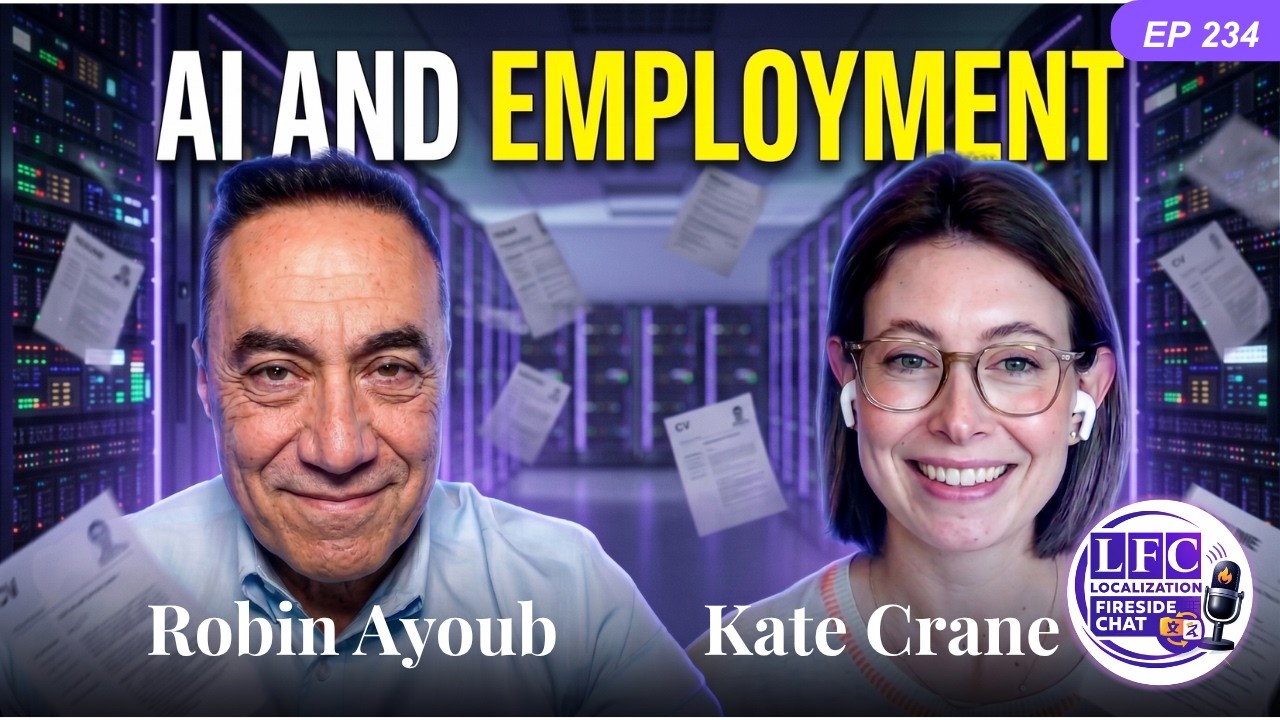
Bots Writing Resumes, Bots Screening Them: A DoorDash & OpenTable VP on What Hiring Looks Like Now
Kate Crane studied art history. Then a layoff in 2008 sent her into a restaurant kitchen, then business school, then a run at DoorDash that took its B2B business from $9 million to over $500 million.
A few weeks ago, Kate Crane sent me a cold email. She referenced Episode 200 with Jurgen Dauk, specifically the part where we talked about the gap between vision statements and what actually happens on the ground. She said that gap was something she had lived from both sides, as the applicant getting rejected and as the executive making the hiring decisions.
That email is what brought her onto this episode.
From Art History to a Layoff That Changed Everything
Kate grew up in Fort Worth, Texas, surrounded by an arts community most people don’t associate with the city. She studied art history and business at UT Austin, did five internships, and moved to New York to work at an art gallery in Chelsea. It was 2008. Six months later she was laid off.
She applied to fifty jobs. She got three interviews. Nothing landed.
So she talked her way into a job as a line cook. She has called it the most humbling professional experience of her career. It also taught her something about herself: she didn’t want to work in the kitchen, she wanted to own it. That realization sent her to business school for an MBA, then into management consulting in oil and gas, then to Denver with her now-husband to refocus on what she actually wanted to do.
Scaling DoorDash From $9M to $500M
What she wanted to do was food. That’s how she found DoorDash.
She joined on the driver side, managing markets across the western US. Then she moved to the merchant side, joining DoorDash Drive when it was doing nine million dollars a year in revenue. Over three years as GM of US Restaurants, that number grew to an annualized five hundred million. COVID hit in the middle of it. So did the IPO.
From there she went to Flock Safety to build out strategy, operations, and a full data and analytics function from scratch. Then to OpenTable, where she ran go-to-market strategy. And now she’s the founder of Direction Over Perfection, a career coaching practice for people navigating nonlinear paths.
The Bot to Bot Hiring Problem
I’ve talked before on this show about what I call “bot to bot” hiring. A candidate uses AI to write their resume. A company uses AI to screen it. Neither side is talking to a human, at least not at first. I asked Kate where she stands on this, given she’s been on both sides of that table.
Her answer was direct. She uses AI every day. She thinks it’s a genuinely useful tool for tightening a resume or prepping for an interview. But the application ecosystem itself, she said, is broken. It works well for employers, who get flooded with applicants and have tools to manage that flood. It does not work well for candidates, because roles get filled or closed before a human ever reads most of the resumes that came in.
If you get rejected within 24 hours of applying, she said, a human did not read your resume. The applicant tracking system did.
So what actually works? Kate’s answer was not “spray and pray,” and it wasn’t “go all in on one job” either. It’s both, plus something else: you apply to the job, and you also network your way into it. You want your name showing up twice, once in the system and once through a person inside the company who can vouch for you.
Storytelling and Why Localization Is More Than Language
We also talked about storytelling, something Kate raised in her original email to me. At OpenTable, she worked on figuring out not just which products fit which markets, but what each market’s dining culture actually needed. Germany might not need a CRM tool if what restaurants there really need is a waitlist system. The UK might be the opposite. That’s localization in the truest sense, and it’s not just about language.
Advice for New Graduates
Toward the end of the conversation, we shifted to young people entering the job market right now, the ones with no track record yet, just a degree and a lot of uncertainty. Kate’s advice: get a degree, but stop treating it as a rubber stamp. Work every summer and semester, even if it’s a restaurant job or unpaid internship. That work becomes your “professional education in parallel with your academic education,” and it’s what lets you apply for your first postgrad job instead of your first job, period.
I asked Kate what one sentence she’d send back to her art-history-graduate self.
“Take more accounting classes,” she said. Her degree taught her how to think. It didn’t give her the hard skills to get hired. Both turned out to matter.
Where This Leaves the Localization Industry
We closed on AI and what it means for people in knowledge industries, including the translators and localization professionals who make up a large part of this audience. Kate’s view: AI won’t replace people. It might mean three people do the work that used to take seven. But the people who learn to manage and direct AI are not going anywhere. Someone still has to be in charge of the technology, not the other way around.
Connect with Kate Crane on LinkedIn: https://www.linkedin.com/in/katecrane7
Visit Direction Over Perfection: https://directionoverperfection.com
Watch Episode 234 on YouTube: https://youtu.be/tZTz5cF7au4
Listen on Simplecast: https://localization-fireside-chat.simplecast.com/episodes/bots-writing-resumes-bots-screening-them-a-doordash-opentable-vp-on-what-hiring-looks-like-now
Connect with Robin Ayoub on LinkedIn: https://www.linkedin.com/in/robinayoub
Visit N49Networks: https://n49networks.com
Book time with Robin: https://calendly.com/robin-ayoub/30min


Leave a comment