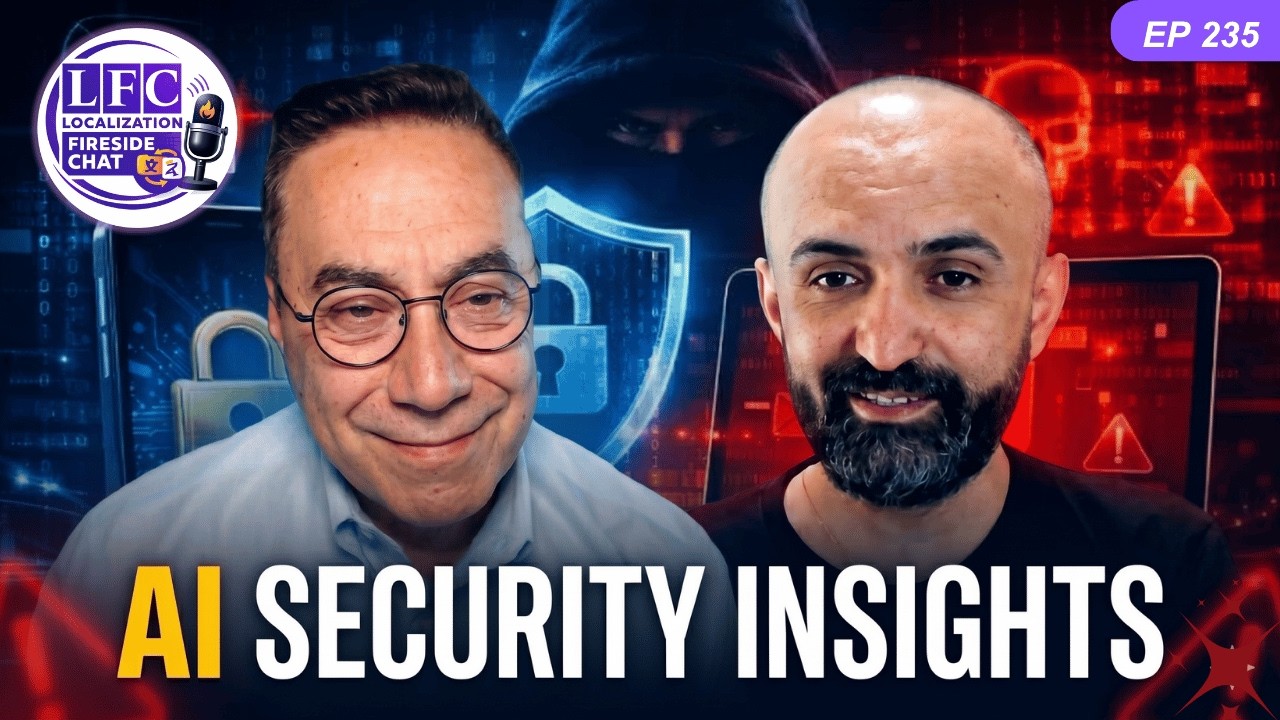
He Turned $25K Into $1.9M, Lost It, Then Built AI That Protects Your Data
Some guests arrive with a pitch deck. Yagub Rahimov arrived with a life story that sounds more like a parable, and a company built on the lesson at the center of it.
Yagub left Azerbaijan as a teenager, selected for a US State Department cultural exchange program in 2005. He graduated high school in America, went home a different person, and never really stopped reinventing himself since. He became an award-winning trader before most people finish school, turned 25,000 dollars into 1.9 million, then watched greed and a failing sense of discipline take most of it back. He rebuilt, co-founded a fintech media group, exited to private equity in 2020, and then turned his attention to a problem he calls the biggest trust issue of our time: how do you adopt AI without handing over your data, your secrets, and your credibility?
The bicycle that changed everything
Long before the trading floor, there was a bicycle. Yagub asked his father for one at ten years old. His father asked him a single question, do you need it or do you want it, then disappeared for the better part of a year working night shifts to afford it. Yagub did not understand the sacrifice at the time. He only understood it later, and it became the foundation of how he thinks about responsibility, risk, and what wealth actually means.
Losing it to greed, then learning to listen for the signal
The trading collapse came down to one thing in Yagub’s telling: discipline gave up before he did. He turned a stake of 25,000 dollars into 1.9 million, then lost roughly 700,000 to decisions he now describes plainly as greed. The recovery lesson he carries forward is simple to say and hard to live: eliminate the noise, focus on the signal. He has not traded personally since, by his own choice and a signed commitment.
Why small beats big for sensitive AI work
This is where the conversation turns into the heart of Polygraf AI. While most of the industry chases bigger models and bigger clouds, Yagub went the other direction. Polygraf builds small, locally deployed, explainable AI models that run on as little as 8 gigabytes of RAM, each one trained for a single task rather than trying to be everything to everyone. The pitch is straightforward: a model built only to detect privacy risk will outperform a general purpose model at that one job, every time.
The reasoning goes deeper than accuracy. Running models locally eliminates the latency of round-tripping data to the cloud, and more importantly, it eliminates the need to trust a third party with sensitive information in the first place. Yagub’s view on this is unusually direct for a tech founder: he says the correct stance is not “trust me with your data,” it is “don’t trust your data to anyone, including me.”
Catching deepfakes and AI-assisted cheating
Polygraf’s models focus on context and provenance, tracing where information actually originated rather than relying on outdated pattern matching like regex. One of the more striking numbers from the conversation: by Yagub’s estimate, 42 percent of job interview candidates today are using AI to feed them answers in real time. Catching that kind of context-level deception, along with deepfakes and data leakage, is the core of what Polygraf calls AI behavioral control, a category the company is working to define alongside firms like Gartner and Frost & Sullivan.
The hidden risk in bring your own LLM
As more platforms let customers plug in their own language models, Yagub flagged a risk that gets little attention: API key security. He pointed to tens of thousands of exposed API keys sitting in public code repositories at any given time, a vulnerability that becomes catastrophic when the data behind that key belongs to a law enforcement agency, a bank, or a healthcare provider.
Five years out
Yagub’s long-term vision is AI running privately on every device a person owns, phones, watches, even appliances, each protected by a small footprint model rather than a connection back to someone else’s cloud. It is a vision built on a value he keeps returning to throughout the conversation: trust is not something you are given. It is something you earn, one signal at a time.
Connect with Yagub Rahimov:
https://www.linkedin.com/in/yrahimov/
https://polygraf.ai
Watch the full episode:
https://youtu.be/nxCZTk1Ld7U
Listen on Simplecast:
https://localization-fireside-chat.simplecast.com/episodes/he-turned-25k-into-19m-lost-it-then-built-ai-that-protects-your-data-yagub-rahimov
Connect with Robin Ayoub:
https://www.linkedin.com/in/robinayoub/
N49Networks:
https://n49networks.com
Book a podcast conversation:
L10NFiresidechat@gmail.com


Leave a Reply