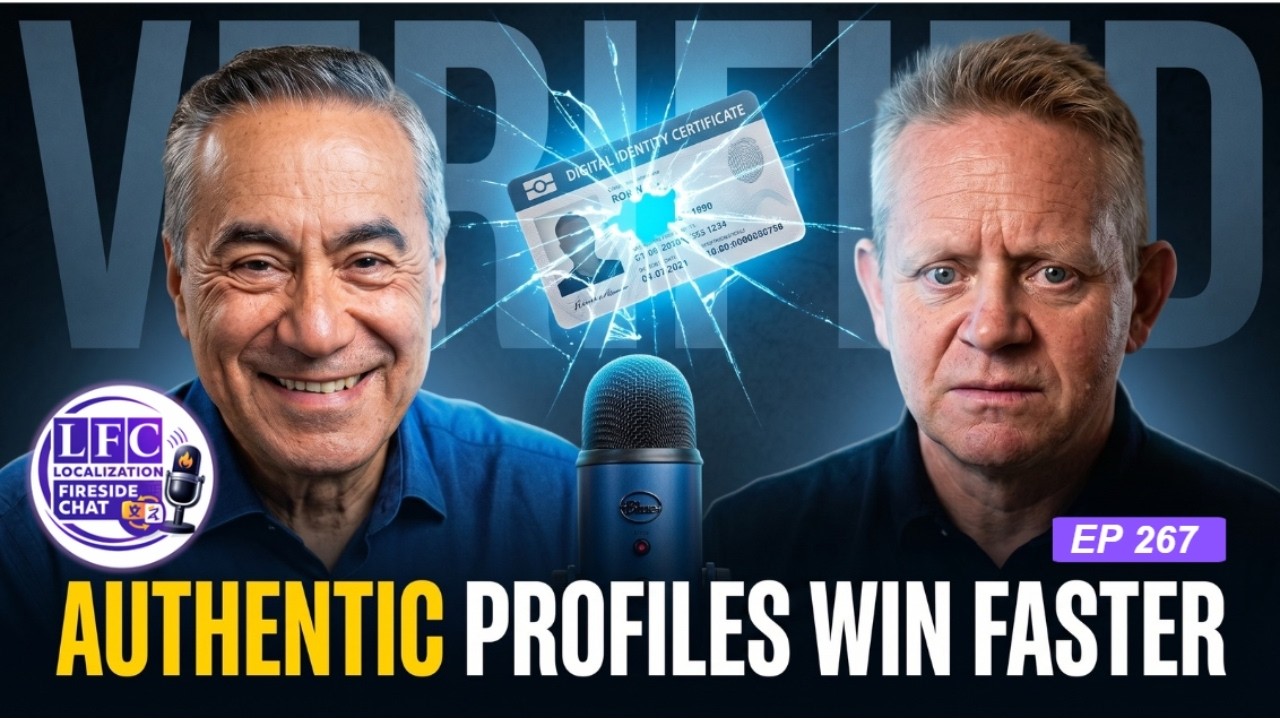
When AI Broke the Hiring Process
Somewhere in early 2025, Thor Hesselberg’s colleague sat down for a round of screening calls with eight candidates who looked perfect on paper. Four of them were not who they claimed to be. People from Asia had applied to a Poland-based position under Polish names, complete with polished CVs that matched the role almost suspiciously well. That moment, Thor told Robin in Episode 267, was the catalyst that turned an observation into a company. WorkID.ai was born out of that specific frustration, not as a theory about the future of work, but as a direct response to a recruiting crisis that was already happening in the present. Thor had spent thirty years on both sides of the hiring table, running Deca People and advising large technology organizations through transformation. He knew where the system was supposed to hold. He watched AI break it in real time.
The problem Thor kept returning to throughout the conversation is deceptively simple. Hiring has always followed the same sequence: assess first, verify later. Candidates are screened, interviewed, and evaluated before anyone seriously checks whether their background is real. AI has made that gap catastrophically expensive. Gartner projects that by 2028, one in four candidate profiles will be deepfakes. Thor cited a case involving North Korea where 167 fabricated applicants were submitted to companies, and 76 of them were actually hired, meaning they were given access to corporate data, systems, and intellectual property. Every hiring decision, as Thor put it plainly, is an access control decision. The industry just has not been treating it that way.
What WorkID Actually Does and Who It Belongs To
WorkID is a candidate-owned system of records. That framing matters more than it might initially sound. Thor was deliberate about the ownership model: your work history belongs to you, not your employer, not a recruiter, not a platform. A candidate builds a profile, completes an identity verification through document and liveness checks, and then attaches verifiers to past positions. Previous managers or HR contacts receive a prompt, confirm the dates and role, and the platform uses background intelligence to validate the likelihood of that confirmation being legitimate. What gets built over time is a trust score, something Thor compared directly to a credit rating. It does not tell an employer whether a candidate is the right fit. It tells them whether the candidate is real and whether what they are claiming is accurate.
The portability dimension is where the model gets genuinely interesting. In traditional recruiting, every failed application is a sunk cost. The interviews, the assessments, the verification steps all disappear when someone does not get the job. WorkID carries that verified record forward into the next process, so a candidate is not starting from zero every time. Robin connected this to something he has felt across thirty years in the localization industry: no matter how much credibility you have built, every new room requires you to establish it again from scratch. That is precisely the gap WorkID is designed to close.
Trust as Infrastructure for a Global Labour Market
Thor is under no illusion that building a trust layer for global hiring is a short sprint. WorkID launched publicly on August 1st of this year. The team is bootstrapped, intentionally. Thor has been through the investor cycle before and watched return timelines override quality decisions. As of recording, the platform has fifty clients, fifteen more on a waiting list, ten founding recruitment partners helping shape the product, and a growing candidate waitlist. The goal by 2033 is twenty million verified profiles. That ambition requires WorkID to mean something to an employer in Singapore or São Paulo who has never heard of a Norwegian startup. Thor’s answer to that challenge is that the further a hiring decision is from someone’s local network, the more trust infrastructure matters. Cross-border hiring has always been the hardest problem to solve with informal verification. WorkID is designed for exactly that distance.
What Thor keeps coming back to is the candidate who plays it straight. Sixty-four percent of people admit to lying on their CVs, and that number is growing because the environment rewards it. If everyone polishes to the same level, authenticity becomes the scarce thing. Candidates who choose to be verified are not just being honest. They are differentiating themselves in a market where everyone else has been optimized into looking identical.
If this conversation landed for you, the full exchange is worth your time in either format. Watch on YouTube to catch the moments where Thor and Robin work through the harder questions together, or Listen on Simplecast if you prefer the audio version on your next commute. Either way, this is Episode 267 of the Localization Fireside Chat and one of the more practically urgent conversations we have had on the show.


Leave a comment