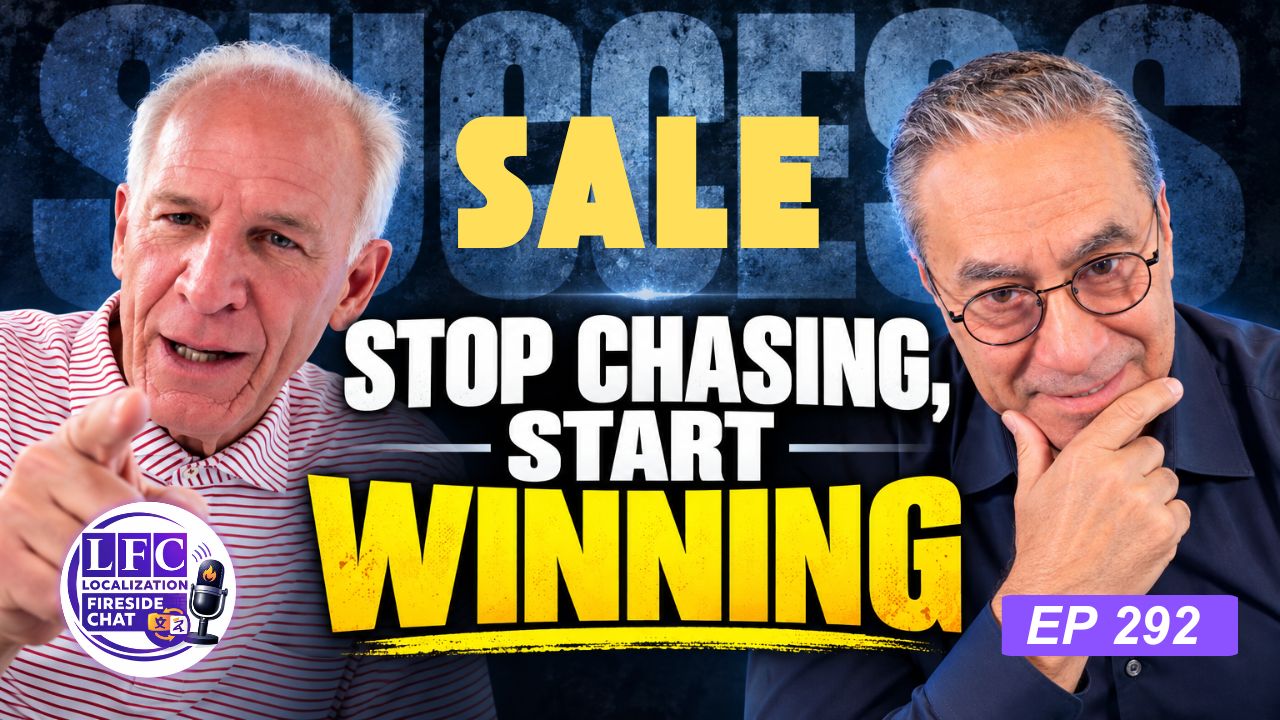
Every Deal Is Already Decided by a NO
Jon Webb has spent 39 years in B2B sales, from individual contributor all the way to Chief Commercial Officer, and the single most honest thing he says about his first 19 years is this: it was never about the customer. It was about the quota. He describes himself in those early days as a quota chaser, competitive to the point where losing at Monopoly bothered him, but missing the one ingredient that actually drives revenue over the long term. That ingredient was the customer. A day-long training with sales author Paul Cherry changed his entire frame, and from that point forward, Jon stopped asking how to overcome objections and started asking a more uncomfortable question: why does the customer keep saying no, and do I even know which kind of no I am actually dealing with?
That question eventually became the foundation of his book Selling Against NO! and the operating system he now installs inside sales organizations through his company Major League Selling. The system is built on what he calls the three C’s, curiosity, competitiveness, and creativity, combined with three daily operating words: help, serve, and influence. Those words sound simple, and Jon is aware of that. But his point is precisely that simplicity. Every seller, regardless of industry or deal size, can help, serve, and influence a customer on any given day. When those three things become the mission rather than the quota, something shifts. The quota, more often than not, follows.
The Seven NOs and the False Yes That Is Draining Your Pipeline
The most practical and immediately transferable part of Jon’s framework is his diagnostic map of the seven types of NO. He is careful to say there are probably more than seven ways a deal can die, but he has distilled the most costly ones into a structure sellers can actually use in the field. The silent no, where a promising conversation simply goes dark, is among the most misdiagnosed. The soft no, where a buyer keeps asking for more information without ever committing, is another. But the one Jon argues costs companies the most money is the internal no, because those are almost always the largest quotes sitting in the pipeline, stuck behind a champion who has not been equipped to navigate their own organization.
The false yes might be the most dangerous of all. When a buyer says get me a quote, a seller with happy ears hears yes. That quote lands in the pipeline, it gets managed through sales meetings, pressure mounts, and eventually the seller cuts the price trying to save a deal that was never real. Jon is blunt about what that teaches the buyer: that the price was never the price. The false yes is not just a forecasting problem. It is a margin problem, a trust problem, and a training problem. His solution is a diagnostic power app that sits in front of any CRM and forces sellers to identify which no they are dealing with before the false yes ever gets logged.
Be a Force for Good and the Scoreboard You Are Not Tracking
One of the most memorable exchanges in this episode happens when Jon introduces what he calls the soft scoreboard. Most sellers track one number. Did I hit my quota today? Jon argues there is a second scoreboard running in parallel, one built from self-reflection at the end of each day. Was I a force for good? Did I help, serve, and influence the people I sat across from? His experience, across nearly four decades, is that winning the soft scoreboard is the most reliable predictor of winning the hard one.
This philosophy shows up in an unexpected place in Jon’s career story. He once sent a notoriously difficult engineering buyer a Sammy Hagar album and a Rusty Wallace NASCAR model, both together under fifty dollars, after asking the buyer’s executive assistant what the man actually cared about outside of work. That buyer called within a week. The account grew to over a million dollars. The buyer became a friend. Jon took him to a NASCAR race because he genuinely wanted to. That is not a closing tactic. That is what relationship equity looks like when it is built on real curiosity rather than commission breath.
Jon’s book Selling Against NO! is written as a field manual, with a leader’s guide and coach’s whistle section at the end of each chapter designed to make it teachable inside any organization. He wants sales managers to be able to run the training themselves. That intention, to build something that outlasts his own involvement, says more about his philosophy than any framework could.
If this conversation shifted how you think about the deals you have been losing and why, the full episode is worth your time in either format. Watch on YouTube for the full visual conversation, or Listen on Simplecast if you prefer audio. To connect with Jon Webb directly, visit majorleagueselling.co or find his book Selling Against NO! on major retail sites. You can also search Jon Webb on LinkedIn under Major League Selling. The Localization Fireside Chat is hosted by Robin Ayoub, with 290 plus episodes and over 200,000 downloads covering real conversations across language, technology, and business. Get every episode in one place by downloading the free LFC app on the App Store or Google Play.


Leave a Reply