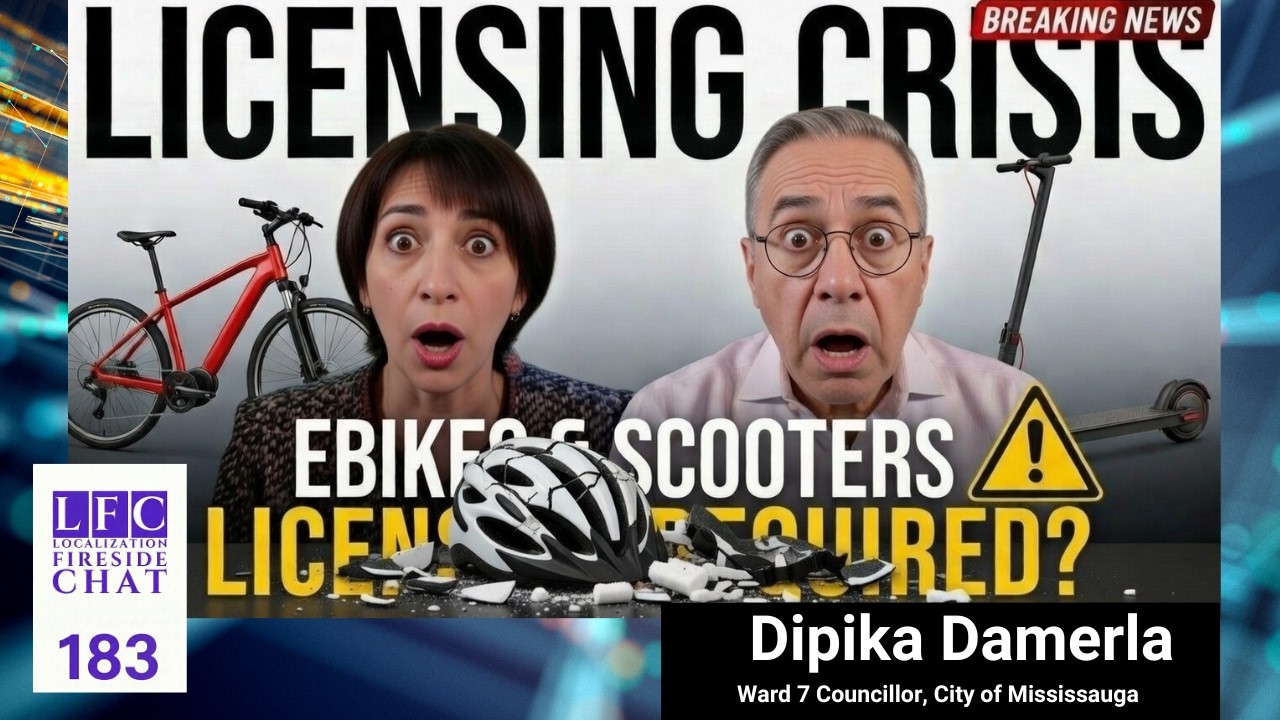
YouTube Episode: https://youtu.be/gDC-w6UTf-4
Podcast Audio: https://localization-fireside-chat.simplecast.com/episodes/mississauga-scooter-licensing-debate-750-injuries-reported-dipika-damerla
Mississauga is at a decision point.
Electric scooters have moved from novelty to reality on city streets. What began as a convenient, affordable transportation option has evolved into a governance challenge. With approximately 750 related injuries reportedly recorded in the city over recent years, the debate is no longer abstract.
This is no longer about gadgets. It is about policy, safety, infrastructure, and long-term urban planning.
In this episode of the Localization Fireside Chat, I sit down with Dipika Damerla, Ward 7 Councillor for the City of Mississauga, to unpack the full scope of the scooter licensing debate.
Why Licensing Is Even on the Table
Scooters fill a real mobility gap. They offer flexibility. They help with first-mile and last-mile transit. They appeal to younger residents. They reduce dependency on cars.
But they are also motorized devices operating in public space.
The core question becomes simple: Should they be regulated like other motorized vehicles?
Councillor Damerla argues that the current regulatory gap creates risk. If a car, moped, or motorcycle requires licensing and registration, why should a high-speed electric scooter be treated differently?
That is where the policy tension begins.
The 750 Injury Statistic
One of the most compelling elements of this debate is the reported number of injuries. Approximately 750 related injuries have been recorded in Mississauga in recent years.
That figure changes the tone of the conversation.
When injuries reach that scale, the issue moves beyond inconvenience or aesthetics. It becomes a public safety matter. Seniors navigating sidewalks. Parents pushing strollers. Commuters sharing limited bike lane space. Emergency rooms processing preventable incidents.
The debate is no longer about preference. It is about risk management.
Public Safety vs Urban Innovation
Scooters represent two opposing forces:
• Innovation in mobility
• Risk in unregulated environments
Mississauga, like many cities, is built primarily for cars. Introducing high-speed micro-mobility into a car-dominant infrastructure system creates friction.
Questions raised in the episode include:
• Are current bike lanes sufficient?
• Who enforces improper parking?
• Who carries liability in a collision?
• Should helmets be mandatory?
• Should there be speed caps or geo-fencing near schools?
The issue is not whether scooters exist. They already do. The issue is whether the city’s governance model has kept pace.
Enforcement Reality
Policy without enforcement is theatre.
Licensing raises immediate operational questions:
• Who monitors compliance?
• What are the penalties?
• Will enforcement be proactive or complaint-driven?
• Is there staffing and budget allocated?
Cities often underestimate enforcement cost. Without clarity, licensing risks becoming symbolic rather than practical.
Environmental Argument: Fact or Assumption?
Scooters are frequently positioned as green alternatives.
But lifecycle analysis matters.
• Battery production
• Charging logistics
• Short equipment lifespan
• Collection vehicles
If the environmental benefit is overstated, policy must be grounded in measurable impact, not marketing language.
Equity and Access
Scooters typically cluster in denser areas.
Will licensing primarily benefit downtown residents?
What about suburban neighborhoods?
Does this policy widen mobility gaps or close them?
A responsible city policy must consider access across wards, not just high-density zones.
A Broader Governance Question
What makes this episode compelling is not simply scooters.
It is what scooters represent.
This debate reflects how cities respond to technological change. Do we wait for harm before acting? Or do we regulate proactively?
It also forces political accountability.
If licensing succeeds, what does Mississauga look like in five years?
If it fails, what changes?
These are the questions that matter.
Why This Conversation Matters
Municipal politics often shape daily life more than federal or provincial debates. Sidewalks, transit, zoning, enforcement, public safety. These are hyper-local decisions with real consequences.
Scooter licensing is a case study in modern city governance.
It sits at the intersection of:
• Public safety
• Urban design
• Climate strategy
• Innovation policy
• Community trust
And it affects everyone who uses Mississauga’s streets.
Watch or Listen to the Full Discussion
YouTube:
https://youtu.be/gDC-w6UTf-4
Podcast Audio:
https://localization-fireside-chat.simplecast.com/episodes/mississauga-scooter-licensing-debate-750-injuries-reported-dipika-damerla
Final Thought
Whether you support scooter licensing or oppose it, one thing is clear.
Ignoring the issue is not a strategy.
If approximately 750 related injuries have been recorded, governance must respond. The question is how.
What is your position?
Should Mississauga license scooters?
About the Host
Robin Ayoub is the Founder of the Localization Fireside Chat and Founder of N49Networks. He interviews leaders across business, technology, governance, and public policy, bringing practical conversations to topics that shape how we work and live.
Website: https://www.n49networks.com
Podcast: https://www.l10nfiresidechat.com


Leave a comment