The Conference That Went Virtual and Delivered Anyway
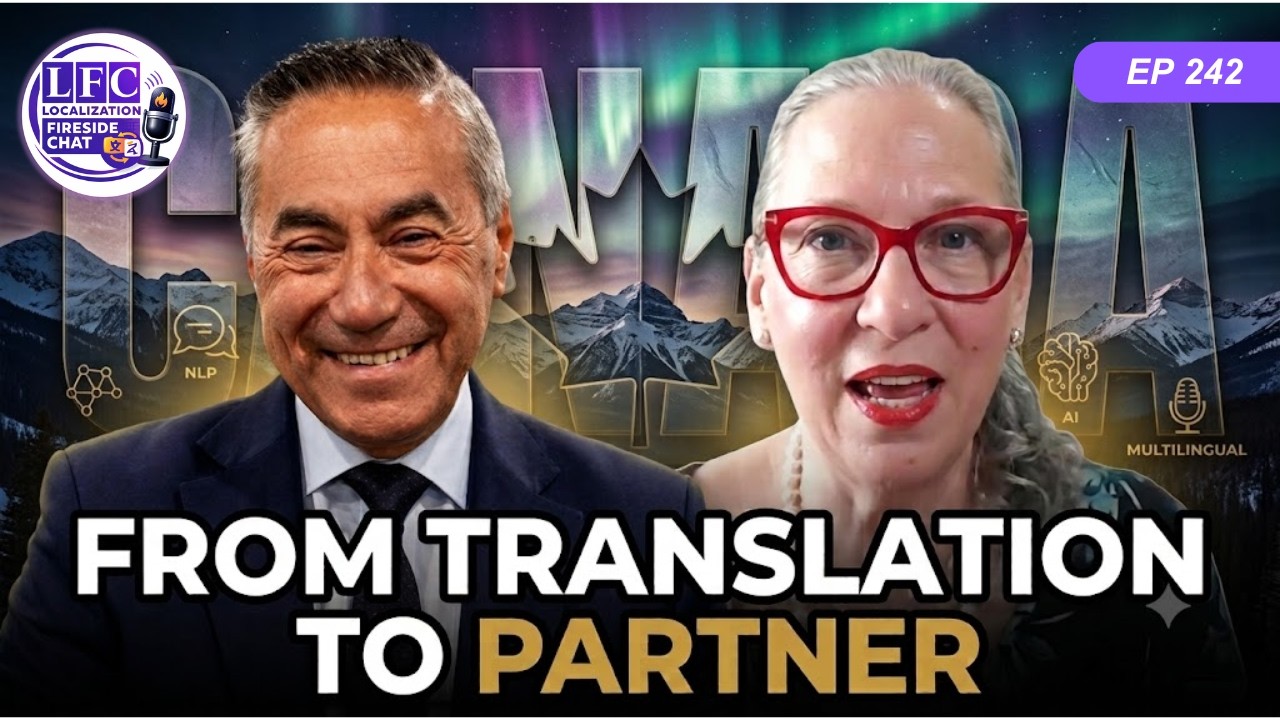
Episode 242 of the Localization Fireside Chat brought together two people who had front-row seats at the 2026 CLIA WorldSpeak Conference: host Robin Ayoub, who moderated a panel on the state of the Canadian language industry, and guest Carla Itzkowich, Senior Advisor at Foresight Consulting LLC, who organized and led a panel on mergers and acquisitions. The conference made a last-minute pivot to virtual, which drew a predictable mix of frustration and appreciation. Carla was still in California, which meant a five AM wake-up call to catch the opening remarks. But as both agreed, going virtual expanded the audience significantly and produced recordings that a live event often would not. The tradeoff is real: you lose the hallway conversations and the human warmth, but you gain reach and accessibility. For an industry actively debating its own transformation, hosting a conference about change in a changed format felt appropriate.
Selling Peace of Mind, Not Words
The keynote from Renato Beninatto set the tone for much of what followed. His argument, which Carla enthusiastically endorsed, is that language companies are no longer in the business of selling translation. They are selling peace of mind. Carla traced this framing all the way back to a campaign she ran decades ago built around the idea of helping clients sleep better at night, knowing their foreign-language content would not embarrass them in front of their customers. That instinct has never been more relevant. Robin pointed to a very public example: a billboard on Highway 20 in Montreal where the word GOAT, meaning Greatest of All Time, was rendered as a literal goat image. Carla countered with her own classic, the Spanish false cognate embarrassado, which means pregnant rather than embarrassed, and which has produced some spectacularly awkward client communications over the years. The point behind the laughter is serious. As AI lowers the cost and raises the volume of translated content, the professional language industry’s value is not in the words themselves but in the judgment, context, and accountability that surrounds them. Buyers at the conference, including representatives from PepsiCo, Air Canada, and Bank of Montreal, confirmed exactly this. They want a partner who will navigate the AI landscape with them, not a vendor who delivers files.
M&A as a Growth Strategy, Not Just an Exit
Carla’s panel brought together voices from three continents to examine how language companies are growing through acquisition, and why that path is becoming more attractive as organic growth gets more expensive. She noted that roughly ten percent of companies in the Association of Language Companies’ most recent survey reported growing by acquisition, a meaningful shift. Building a sales team, running RFPs, and investing in marketing is costly and slow. Buying revenue, or merging with a complementary company, can open new verticals, add language pairs, and give you something genuinely new to say when you call a client. That last point matters more than people realize. Carla made the case that M&A gives you a reason to pick up the phone. Calling a client to ask why work has dried up rarely lands well. Calling to say you now offer interpretation services alongside translation, or that you have added a data services capability, is a different conversation entirely. She was careful to add the disclaimer she always gives: integration is hard, the gap between what sellers expect and what buyers will pay remains significant, and nobody should go into an acquisition without preparation. But the opportunity is real, and creative deal structures are emerging that make growth through partnership accessible even to smaller agencies that are not sitting on piles of capital.
AI Optimism Needs a Reality Check
The conference closed with panels on artificial intelligence that Carla described as genuinely encouraging precisely because governance was starting to enter the conversation. She worries about the volume of bad data being generated and the lack of mechanisms to clean it up. She also raised a striking example from a recent industry event where Unicode had a booth simply to remind software developers that Unicode exists, because so many people building new tools have never heard of it. The problems this industry spent decades solving, from character encoding to translation memory to consistent terminology, are being forgotten by a new generation of builders who think they are starting fresh. Robin connected this to a broader pattern: companies being handed access to AI tools with no training, blowing through token budgets in three months, and then facing C-suite directives to stop using it for anything personal. The Blockbuster versus Netflix analogy that closed the conference resonated with both of them. The risk is not that AI replaces language professionals. The risk is that language companies optimize an old model while the new one takes shape around them. The opportunity is in becoming the advisor who helps clients build the right model in the first place.
This conversation moves fast and covers a lot of ground, which is exactly how Carla and Robin talk when the cameras are on. If you want the full exchange, including the specific moments from each conference panel and the discussion about Canada’s potential as a global AI hub for the language industry, you can Watch on YouTube or Listen on Simplecast and pick whichever format fits your Friday afternoon best.


Leave a comment