The Elevator Pitch Nobody Wants
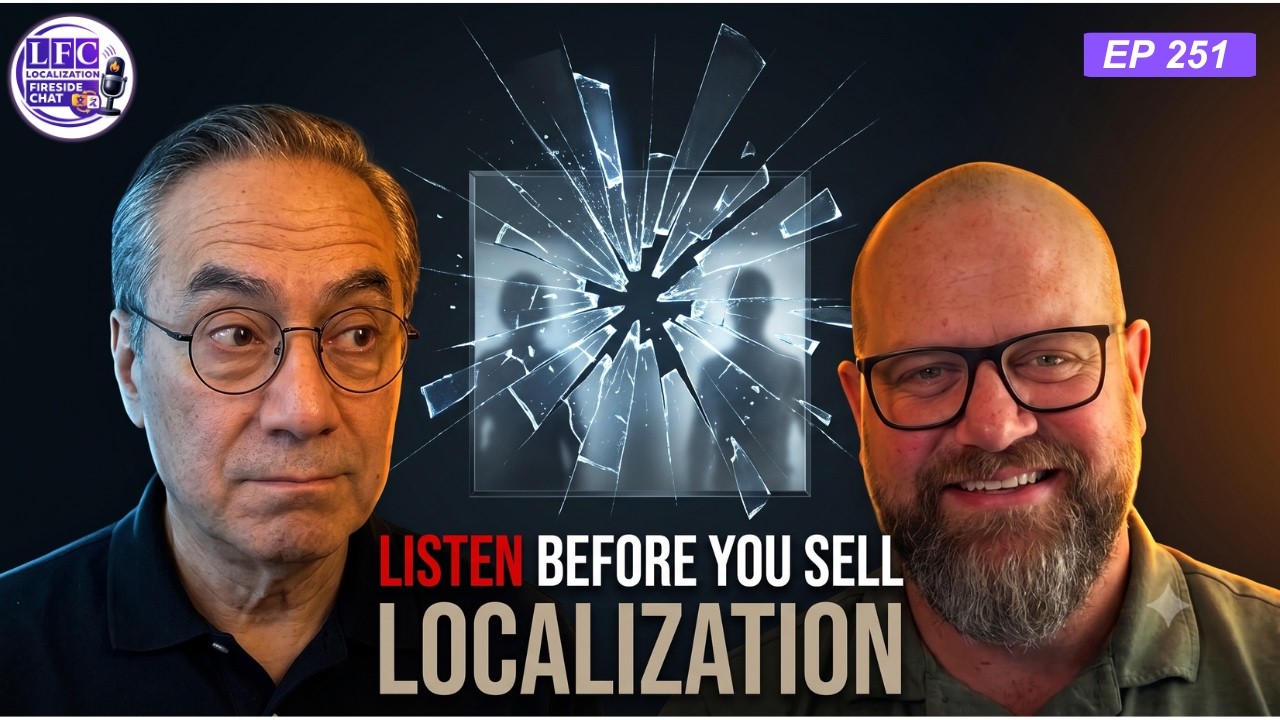
Dan Baird has spent two decades watching how people actually make decisions, first behind one-way glass at Conagra studying why someone would choose one type of popcorn over another, and now as founder and CEO of Wrench.ai, where his team has cut acquisition costs by 83% and driven five times engagement lifts for more than 65 organizations. The thesis he kept coming back to in Episode 251 of the Localization Fireside Chat is deceptively simple: most companies build the pitch they like, not the one their audience responds to. As Dan put it, the highest-performing salespeople ask the most questions because they adapt. Everyone else just repeats their favourite 30-second version of themselves and hopes something sticks. His degree, a bachelor’s in argumentation and decision making that he describes as one of the better decisions of his life, gave him a framework for understanding that people make decisions emotionally and back them up with logic after the fact. Wrench.ai is his attempt to scale that insight using machine learning, statistical analysis, rules engines, and large language models working together, not just an LLM wrapper, as he is quick to clarify.
What Psychographic Profiling Actually Means
When Robin asked Dan to unpack psychographic profiling for an audience that might find the phrase intimidating, his answer was grounded and practical. It is message preference. It is understanding how someone thinks and how they process a decision, not just who they are demographically. Dan walked through one of Wrench.ai’s patented approaches: analyzing the jargon and slang a prospect uses publicly, then comparing it mathematically against the terminology native to a client’s product category. Someone using technical vocabulary fluently is already an early adopter and needs almost no education. Someone avoiding that language entirely is a pragmatic buyer who cares about avoiding bugs and getting a discount. The pitch for each of those people is almost opposite, yet most companies send them identical emails. He also made a point that resonates strongly for anyone working across languages and cultures: doing a direct translation from one word to another does not mean you actually translated it correctly. The meaning shifts with context, with cultural expectations around time and formality and trust, and with the order in which ideas are introduced. For localization professionals trying to make the internal case that language personalization affects conversion, Dan’s argument is that behavioral signals are the most informative data layer available, sitting above demographics and firmographics in predictive value, and that the evidence is already sitting inside customer support transcripts, product reviews, and existing email threads waiting to be used.
Why the Data Almost Always Surprises You
One of the most honest moments in the conversation came when Dan described what happens when a machine learning model is actually allowed to surface which features drove a customer decision. Clients come in certain they know their customer. They have personas. They have a composite character with a job title and a city. And then the model comes back and tells them that one of their strongest conversion signals is whether a prospect works for a company that publicly lists employee happiness as a cultural goal. Not company size. Not industry vertical. Cultural fit around a shared value around human wellbeing. That is the kind of insight, Dan said, that you cannot reverse-engineer from a spreadsheet built on gut instinct. He was equally candid about where data science goes wrong: when models are trained on data collected after a prospect has already entered your funnel, the scores look accurate but they are self-fulfilling. The genuinely hard and valuable work is predicting at the top of the funnel, before any engagement, and then leaving that score untouched for three months so you can audit it honestly. His advice for Monday morning was less about technology and more about posture. Figure out which parts of your work you genuinely love and are irreplaceable at, then build the agents and the automation to handle everything else, because the people who stay relevant through what is coming are the ones thinking strategically, not the ones writing the emails.
This is one of those conversations that keeps opening up the longer you sit with it. If you work in localization, in sales, in marketing, or in any role where reaching the right person with the right message actually matters, Dan Baird gives you a new way to think about what personalization really requires. Watch on YouTube or Listen on Simplecast and decide for yourself whether your current outreach is built for your audience or just for you.


Leave a Reply