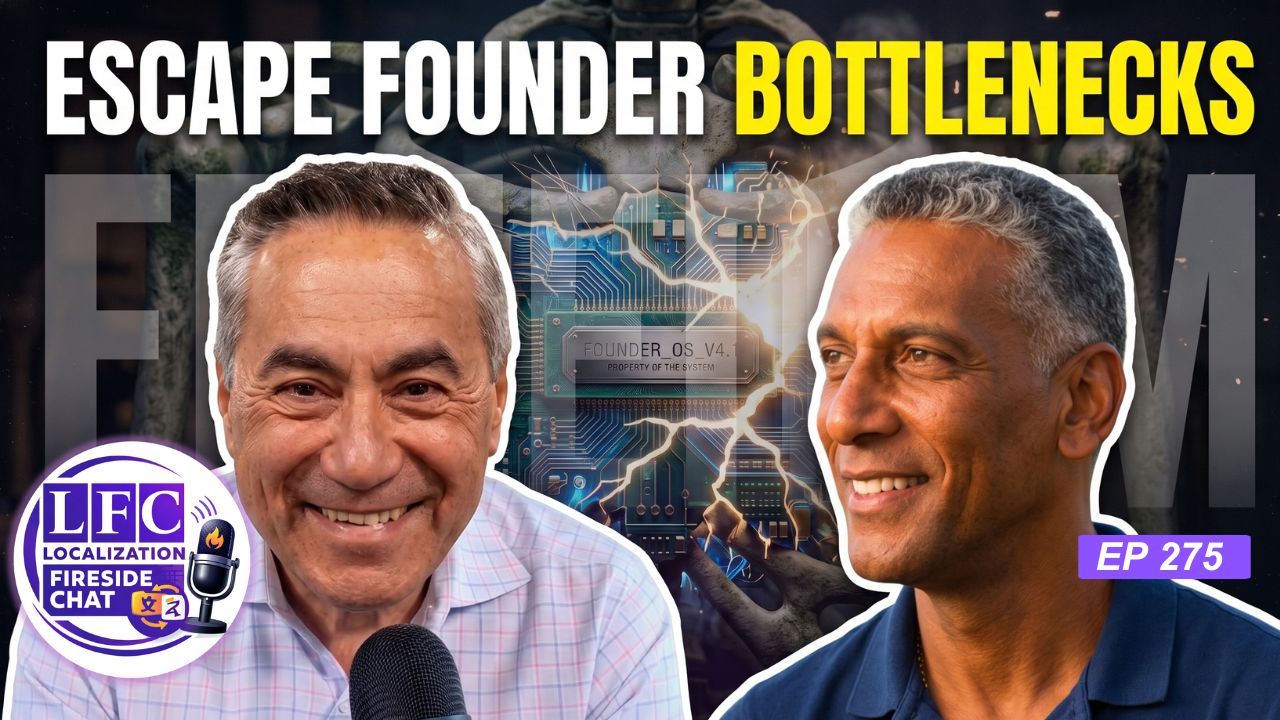
The Caribbean Path to Freedom Architecture
Andre Alexander did not arrive at Mission Freedom HQ through a straight line. Born in Trinidad, educated in Ottawa, shaped by stints at PricewaterhouseCoopers and Unilever, and eventually landing in Antigua as a CFO-turned-consultant, his career reads like a masterclass in following the pull of what actually fits rather than what looks right on paper. What connects every chapter, from brewing industry turnarounds to advising owners drowning in their own success, is a consistent instinct toward fixing the thing underneath the visible problem. When COVID ended his in-person consulting work and a Tony Robbins coach told him he was selling the wrong thing, the reframe landed hard: stop selling business consulting and start selling freedom. The idea that resonated was simpler and more honest than any service offering he had tried before. Show people how to live the way you live, without sacrificing their success and without moving to the Caribbean.
The Invisible Problem That Stalls Growth
The working title Andre pitched for this conversation was “When the Founder Is Still the Operating System,” and Robin did not bury the lead on why that phrase matters. In expertise-led businesses, which describes most of the agencies, tech firms, and consultancies in the LFC audience, the founder’s knowledge, relationships, and judgment become so embedded in daily operations that the business cannot process a decision without routing it through one human being. Andre’s diagnosis is precise: this is not a structural problem first. It is a personal capacity problem that shows up as a structural one. Until the owner gets clear on what they actually want their life to look like, redesigning the org chart is just rearranging furniture. The self-assessment he built at Mission Freedom HQ is intentionally not a diagnostic he administers. It is a mirror the owner holds up themselves, because the first move is recognition, not prescription. His practical suggestion for any founder listening is immediate and low-effort: review the last two weeks and identify which decisions kept returning to you that had no business doing so. That pattern is the map.
Succession, Ego, and the Real Cost of Staying In
Robin made a point in this conversation that deserves to be repeated without softening: succession planning is one of the most consistently failed initiatives in corporate history, and it fails not because companies do not try but because they ask people to train their own replacement without ever addressing the psychological impossibility of that ask. Andre redirected the blame precisely where it belongs, at leadership, because HR can only execute the mandate it receives. The deeper obstacle he named is ego, and not the cartoon villain kind. The badge-of-honor version of ego, where being the one who holds everything together feels like proof of value rather than a trap, is what keeps capable people locked into 60-hour weeks decades past the point where it makes sense. His reframe is worth sitting with: the leader who steps back enough to think, to vision, to actually lead, is not less important. They are doing the thing a body in the operational engine cannot do. He also made a pointed generational argument. Younger talent knows its worth and is not waiting around for leadership that hoards information, resists AI adoption without a plan, and confuses busyness with productivity. The organizations that will keep that talent are the ones where leadership communicates the why before demanding the what.
Andre closed with a question he uses as a north star for every client relationship, and it is worth reading twice: is your success serving the life you actually want to live, or is it consuming more of it? The honest answer to that question, not the reflexive one offered over coffee but the one that surfaces after some quiet, is where the real work begins.
If this conversation opened something up for you, the full exchange is well worth your time. Watch on YouTube or [Listen on Simplecast]() and bring your own honest answer to Andre’s closing question.


Leave a comment