The Startup That Started Everything
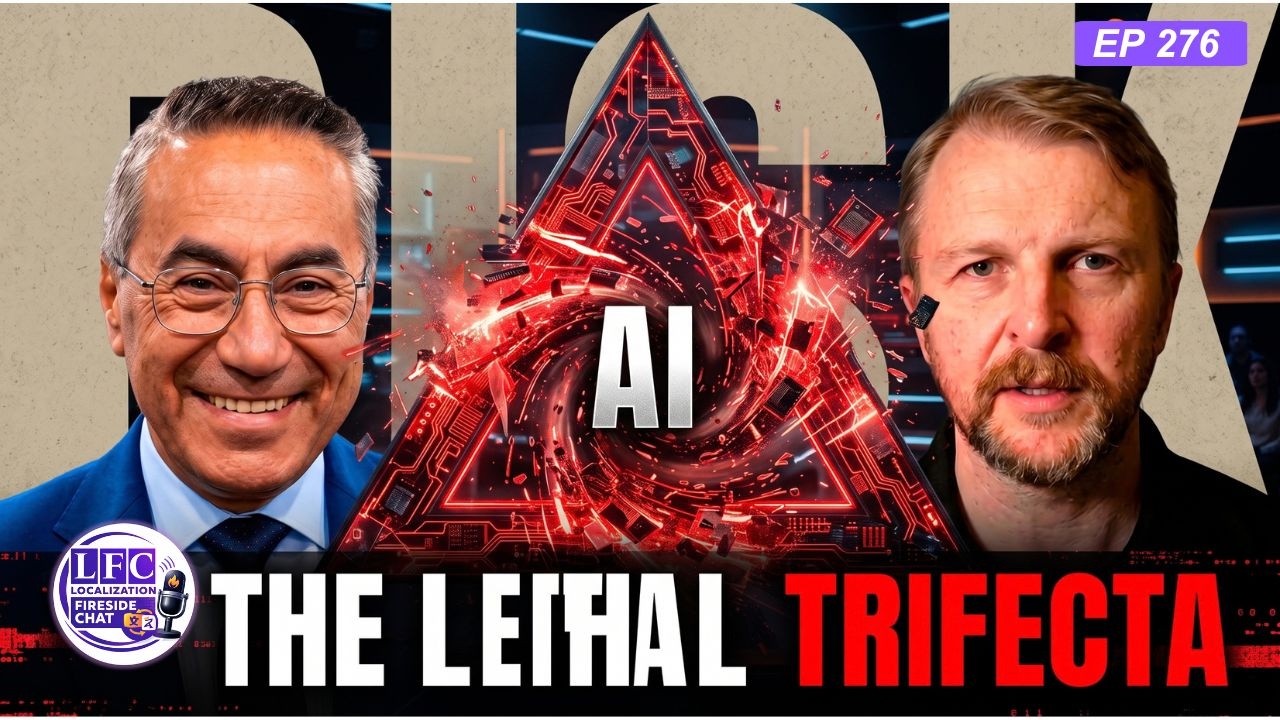
Vidar Hokstad co-founded his first company at nineteen because he was frustrated with Norway’s internet offerings and genuinely did not know how hard it would be. That ignorance, he argues, was a gift. Speaking with Robin Ayoub on episode 276 of the Localization Fireside Chat, Vidar described how that first venture collapsed under a price war with a well-capitalized incumbent, how the company’s lawyer eventually recruited him into his next role, and how every failure since has taught him something a successful exit never could. The throughline across thirty years of startups, VC work, and fractional CTO engagements is the same conviction: the signal in a failure is cleaner than the signal in a win, because success can always be explained away as timing or luck. That mindset shapes everything about how Vidar shows up for clients today, where his first question is never what title they need filled but what problem they actually have.
What the Lethal Trifecta Actually Looks Like in Practice
The sharpest moment in this episode arrives when Vidar walks through the AI risk framework he calls the lethal trifecta, a concept he credits to researcher Simon Willison. The danger is not that any single AI permission is reckless. It is that three individually reasonable-looking decisions can combine into a serious security failure. Vidar uses a concrete example to make it tangible: give an AI agent read access to your email, give it calendar management permissions, and give it read access to your bank transactions. None of those choices seems alarming on its own. But together they create a chain where a malicious email can instruct your agent to pull financial data and forward it to an external address buried inside a calendar invite. The agent does not know it has been manipulated. It is just following what looks like a legitimate instruction. This is the pattern Vidar sees companies sleepwalking into right now, not through negligence but through the convenience-first, governance-later approach that defines most grassroots AI adoption. His prescription is architectural before it is procedural: never give an agent access to act on sensitive systems until you have mapped what it could do if it received a convincing bad instruction.
Why Process Debt Is Compounding the Problem
Vidar and Robin spent time on a tension that will resonate with anyone inside the localization industry. Companies are layering AI onto processes that were never properly documented in the first place, workflows maintained by institutional memory and workarounds that never made it back into the official record. When an AI agent reads that documentation, it treats everything as current and authoritative. The result is an agent confidently executing a process that the actual team stopped following years ago. Robin framed this against the localization industry’s own technology waves, translation memory, then machine translation, then large language models, and noted that the companies hurt most in each cycle were the ones who either moved too fast without governance or too slow without courage. Vidar’s response was direct: the models are genuinely good at translation now, shockingly good in some cases, but they will substitute a contextually wrong word with full confidence, and you will not catch it unless a human remains in the loop with real accountability. His broader advice for any tech leader approaching AI this quarter is to stop babysitting the tool during the work and start reviewing the output seriously when it is done. Define measurable goals, run the agent in an isolated environment where it cannot cause damage, and evaluate results rather than process. That shift alone, from surveillance to outcome review, is where most teams will recover significant time without adding meaningful risk.
This is one of those conversations that moves fast and leaves you with a practical frame you can actually use on Monday morning. If you want to hear Vidar name the three elements of the lethal trifecta in sequence, work through the cloud cost negotiation dynamics most founders never think to attempt, and push back on the assumption that more AI equals more risk, the full episode is worth your time in either format. Watch on YouTube or Listen on Simplecast and choose how you want to take it in.


Leave a comment