The Path That Led to a Localization Blind Spot
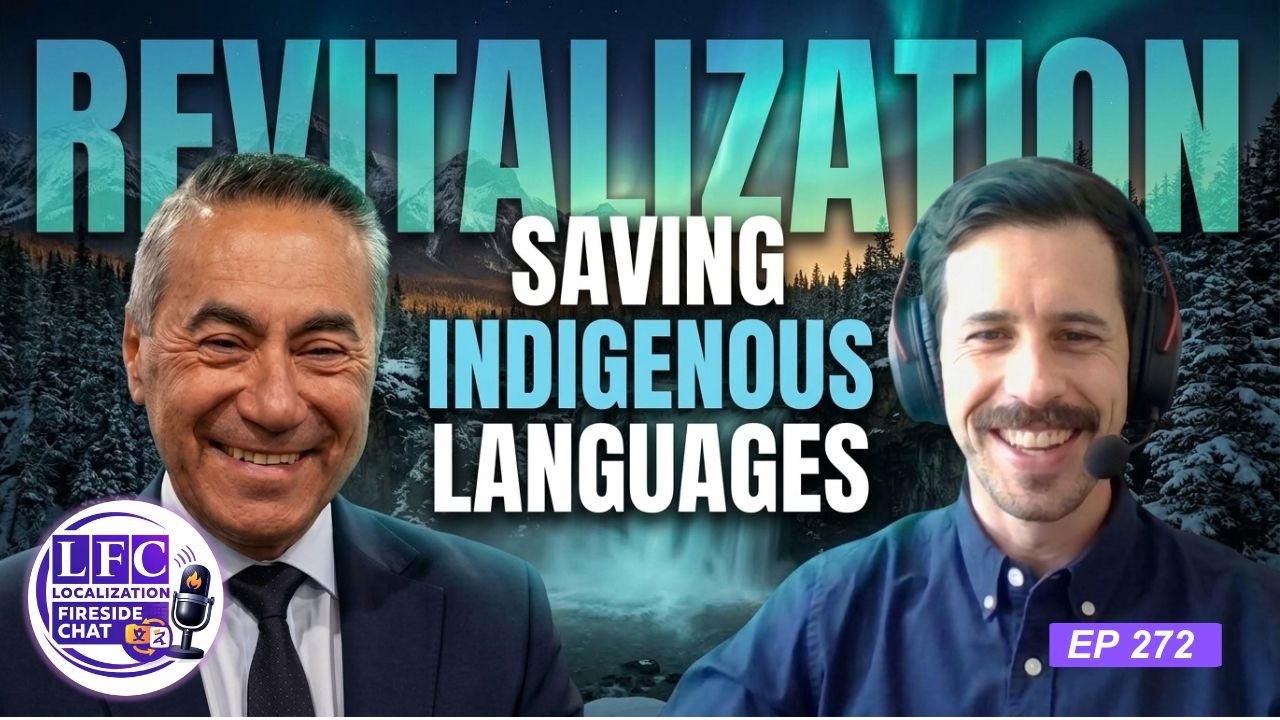
Adam Stone did not arrive at Indigenous language work through a straight line. He started in psychology and linguistics, and his first serious encounter with endangered languages happened not in Canada but in northern Finland, working with Inari Sami data as a research assistant. What struck him was not just the beauty of the language but the shock of recognizing a colonial history that mirrored what had happened to Indigenous communities in Canada. That moment of recognition became the compass that has guided everything since. By the time he completed his PhD in Applied Linguistics at Carleton University and finished a postdoctoral fellowship in language revitalization at the University of Victoria, he had developed what he describes simply as knowing where he is welcome, where he can help most, and where he should step back. His rule is straightforward: he goes where he is invited.
Why the Standard Localization Playbook Does Not Apply
Canada is home to between 70 and 90 Indigenous languages spread across 12 distinct language families, and Adam is careful to make clear that those families are as different from one another as English is from Mandarin. This is not a dialect situation. This is a continent of linguistic diversity that the industry has largely treated as a rounding error. The supply problem alone illustrates why the usual sourcing model breaks down entirely. UNESCO has classified roughly 75 percent of Indigenous languages in Canada as critically endangered, meaning they are no longer being passed down to younger generations at scale. The fluent speakers who remain are almost universally older, already stretched thin by revitalization programs, language nests, and educational work in their own communities. Even when a capable translator can be found, translation training in the formal sense is rarely part of their background. Adam pushes back firmly on the assumption that this disqualifies them. A lifetime of deep linguistic knowledge, he argues, is not something a translation degree can replicate, and the workflow skills that formal training provides can be taught.
The Intersection of Commercial Work and Genuine Responsibility
One of the most honest exchanges in this episode comes when Robin reflects on three decades in the industry and admits that Indigenous languages almost never entered the room at major conferences or association conversations. Adam’s response is measured but clear. Financial logic has historically driven language loss, not just language services, and anyone operating commercially in this space carries a responsibility to use that position carefully. He frames it as the intersection of doing well and doing good, and he means it as a real design challenge rather than a slogan. His work at WinTranslation involves building translator networks, developing community relationships, and creating internal capacity where none existed before. He also talks about the geography of this work in a way that goes beyond metaphor. Indigenous languages have coded the land for at least twelve thousand years, and understanding where languages are spoken today requires understanding patterns of displacement and migration as much as traditional territories. A city like Vancouver now holds some of the largest urban Cree-speaking populations in the country, even though it sits on Squamish and Halkomelem territory. That complexity is what a localization team is actually navigating when they take on an Indigenous language project.
What Revitalization Actually Means and Why AI Complicates It Further
Adam and Robin spend time on the upcoming webinar topic as well, which is the role of AI and machine translation in Indigenous and minority language contexts. The core problem is not philosophical, it is practical. Training data for these languages barely exists in digital form. Many communities have keyboards available through applications like First Voices, and writing systems do exist, but a writing system being available does not mean a community uses it regularly or has produced a corpus large enough to be meaningful for machine learning. The risk is not just poor translation quality. It is that AI models trained on insufficient data embed errors that communities are then expected to validate, placing another burden on the same small group of speakers who are already carrying the entire weight of revitalization work. Adam also raises something quieter but equally important: language endangerment is not only about losing speakers, it is about losing the domains in which a language lives. When every platform, every device, and every major media channel pushes English or French, communities are not just losing people who speak the language, they are losing the spaces where the language belongs.
This is one of those conversations that sits with you after it ends. If you have spent any time in the localization industry and never seriously engaged with Indigenous language work, episode 272 is the honest starting point you have been missing. Watch on YouTube if you want the full conversation with Robin and Adam together, or Listen on Simplecast on your next commute or treadmill session. Either way, it is worth your full attention.


Leave a Reply