When the Signal Never Arrives
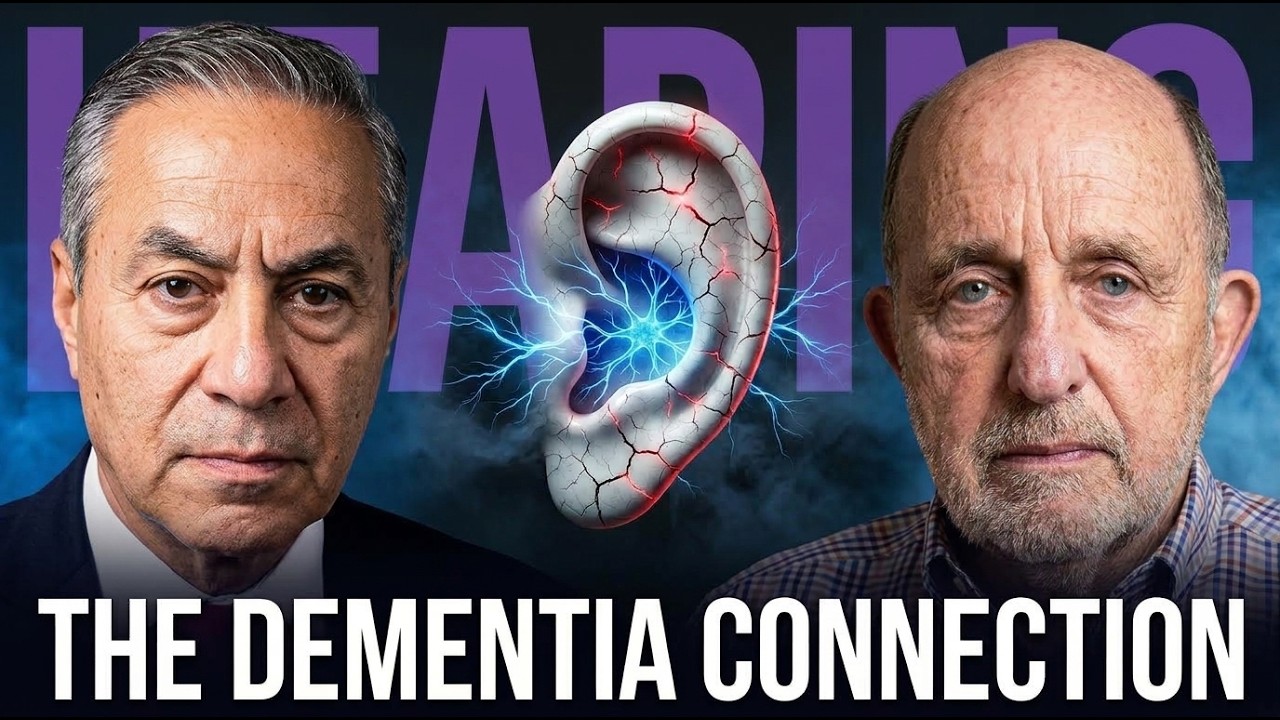
The Localization Fireside Chat is built on one central idea: communication breaks down in more ways than we admit, and the cost of that breakdown is almost always higher than we expect. Episode 273 takes that premise somewhere genuinely unexpected. Robin’s guest, Dr. Robert Keefer, author of Hear Better Live Longer and founder of an audiology clinic in Raleigh, North Carolina, makes the case that one of the most consequential communication failures in modern healthcare has nothing to do with language barriers or cultural misalignment. It has to do with ears. Specifically, with the seventy million Americans who have measurable hearing loss and the sixty percent of them who are not doing anything about it. Robin opened the episode with something rare for a podcast host: a personal admission. His eighty-five-year-old father has been diagnosed with dementia, and the family is living through it right now. That context is not incidental. It is the reason this conversation lands differently than a standard health policy discussion.
The Science Is Not Subtle
Dr. Keefer spent time at the National Advisory Council to the NIH, built a career helping international companies navigate FDA approvals, and arrived at audiology through a market research project for a German medical device company. What he found when he got there stopped him. Research led by Dr. Frank Lin at Johns Hopkins, tracking more than thirty-five hundred patients over years, found that people with untreated hearing loss faced up to four or five hundred percent higher risk of Alzheimer’s disease, along with significantly elevated rates of falls with broken bones and clinical depression. The NIH has since identified hearing loss as the single most modifiable risk factor for dementia, not one of several risk factors but the top one. And yet Medicare, unchanged since 1965 when the link to cognitive decline was entirely unknown, still does not cover hearing aids. Dr. Keefer is careful with his language here, shaped by years of FDA work. He will not say hearing aids prevent Alzheimer’s because the clinical evidence for causation has not cleared that bar. What he will say, plainly, is that the linkage is proven, that the Achieve study has shown reduced cognitive decline in people who address their hearing loss with well-performing aids, and that the economic argument for coverage is straightforward. The United States currently spends two hundred and fifty million dollars annually on Alzheimer’s care alone. That figure is projected to reach one trillion dollars within the next decade.
The Fitting Problem Nobody Talks About
Perhaps the most surprising moment in the episode is not the dementia data. It is Dr. Keefer’s account of what happens inside audiology clinics every day. He estimates that eighty percent of audiologists and hearing instrument specialists tell patients they are using best-practice fitting procedures when they are not. The procedure in question is called real ear measurement, a process where a tiny microphone is placed near the eardrum to map how sound actually travels through that patient’s unique ear canal, across the full frequency range from low to high, so the hearing aid can be fine-tuned to their specific physiology rather than calibrated to a generic profile. The analogy Robin reached for is the right one: it is the difference between getting a glasses prescription based on a real eye exam and buying reading glasses off a pharmacy rack. Dr. Keefer’s practical advice to anyone walking into an audiology appointment is concrete. Ask whether they perform real ear measurements. Ask to see the graphs. Ask them to sign the documentation before you leave. He also draws a firm line between medical-grade hearing aids dispensed by licensed professionals and over-the-counter devices, which he sees as a separate product category with a separate and more limited use case.
This episode will stay with you longer than most, partly because of the numbers and partly because of the personal weight Robin brings to the conversation. If you have a parent showing signs of cognitive decline, or you have been quietly ignoring the moments when you ask people to repeat themselves, this is the conversation to have now rather than later. Dr. Keefer’s book Hear Better Live Longer is available on Amazon and his work can be followed at hearbetterlivelonger.com. You can Watch on YouTube or Listen on Simplecast and choose the format that works best for you.


Leave a Reply