The Man Behind the Mission
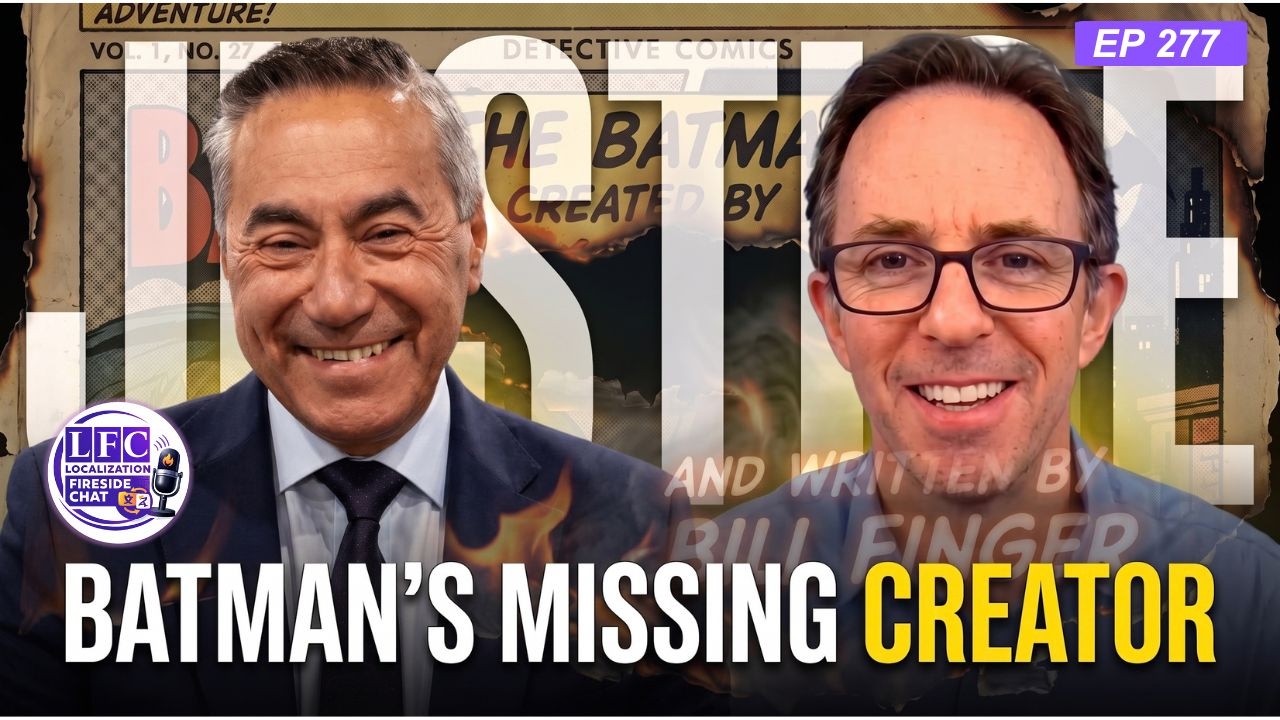
For 75 years, the Batman credit line read one name: Bob Kane. The writer who gave Batman his cape, his cowl, the Bat Cave, the name Bruce Wayne, and the Joker died in 1974 with almost nothing to show for it publicly. Marc Tyler Nobleman, author and speaker, spent nine years trying to fix that. His picture book manuscript about Bill Finger was rejected 34 times before it was published. He blogged, he spoke, he researched, and he kept going when every professional signal told him to stop. The result was a credit amendment that had never happened before in DC Comics history, a Hulu documentary called Batman and Bill, and a street in the Bronx renamed Bill Finger Way. I first heard Marc tell this story in person at an East TradeWind networking event, and I remember thinking this was not just a comic book story. It was a story about credit, erasure, and what one stubborn human being can do about injustice. That is why I brought him to episode 277 of the Localization Fireside Chat.
The MySpace Message That Changed Everything
One of the most quietly dramatic moments in the entire nine-year campaign was a cold message sent through a social media platform most people have forgotten existed. Marc had been told that Bill Finger left no living heirs. Fred, Bill’s only known child, had died in 1992. But during his research Marc discovered that Fred had a daughter named Athena, born two years after Bill himself died, someone who had never met her grandfather and had grown up in a family that had been told not to bother fighting for credit because no one had ever succeeded. Marc found her on MySpace and introduced himself as a stranger working on a book about her grandfather. She said no at first. Her reasons were practical and emotional in equal measure: a full-time job, a young child, and a family history of disappointment. Marc told her he did not know exactly how to move forward either, but that together they could figure it out. Within a couple of days she came around, and without Athena’s participation as the legal heir, Marc believes the credit change may never have happened at all. As he put it during our conversation, just because other people have not succeeded does not mean that no one can succeed.
What Bill Finger’s Story Means for Anyone Who Creates
The parallel that struck me hardest during our conversation is how directly the Finger story maps onto the localization industry and onto creative labor everywhere. Millions of translators, linguists, and content professionals contribute to global products every single day, and almost none of them are ever credited for it. Bill Finger agreed to work without credit in 1939 partly because it was the end of the Great Depression, partly because no one imagined Batman would still exist 85 years later, and partly because he needed the money. That calculation, take the work, skip the credit, keep moving, is one that creative workers in every field still make constantly. Marc made the point that credit is not just a professional formality. It is wrapped up in dignity. He also said something during our conversation that I think applies far beyond comic books: no story in history ends in a period. They all end in a dot dot dot. Someone just has to be willing to come along and continue it. When the DC credit change was announced in 2015, the first time the company had ever amended an existing creator credit rather than simply adding one, Marc described it as an instant highlight of his life, not because it was about him, but because he had worked so hard for a man he never met and it had actually worked.
The Lesson That Outlasts the Win
Marc speaks to audiences all over the world, from schools to corporate keynotes to a TED stage, and the core message he carries is about resilience without the jargon. He does not put graphs on slides. He tells a story and lets the theme land on its own. When I asked him what he would say to someone who knows something is wrong but is calculating whether the fight is worth it, he kept the answer simple. There are two paths. You can try and possibly fail, or you can never try and never know. When you look back, you will regret one of those two, and he does not need to name which one. For anyone in this industry or any other who has ever felt that the odds were written against them before they even started, that is the takeaway from this episode.
You can Watch on YouTube or Listen on Simplecast to hear the full conversation with Marc Tyler Nobleman, including the moment he describes finding Athena, the behind-the-scenes story of the DC credit campaign, and what he would say to anyone ready to stop pulling on an important thread. Choose the format that works for you and share it with someone who needs to hear that stubbornness, applied in the right direction, is not a flaw.


Leave a comment