When Strategy and Execution Stop Talking to Each Other
Daniel Roth has spent more than 27 years watching the same pattern repeat across 15 industries and 45 countries: a leadership team builds a sound strategy, communicates it clearly enough, and then watches the daily work of the frontline pull the organization in a different direction. He calls this execution drift, and he is precise about what it actually looks like in practice. It is not a dramatic collapse. It shows up as repeat approvals that should not need approval, unofficial spreadsheets running alongside the official system, and decisions being made by teams that were never meant to make them. By the time it registers in the quarterly numbers, the drift has been happening for months. The E3 framework he built, documented in his Amazon bestseller The E3 Effect, is his answer to the question he kept asking across every business he entered: what is the gap between what leadership intended and what the frontline actually did today, and how do you close it before it becomes a financial problem?
The 25-Agent Operation and What the Numbers Do Not Show You
One of the most grounding moments in this conversation is when Daniel walks through a healthcare call center transformation that took four years and produced a 57 percent cost reduction while scaling volume by 68 percent and holding retention at 89 percent. Those numbers do not usually move together, and the reason they did here has almost nothing to do with technology or headcount decisions. It started with one director walking into Daniel’s office 45 days into the engagement and saying, I think I get it. We were managing by chaos and you are bringing structure. That moment mattered because it was the leadership layer choosing to be coachable before the frontline could follow. From there, the work was methodical: keeping a simple ticker for one week to count recurring interruptions, identifying whether each problem was controllable by the team, controllable with cross-functional support, or non-controllable for legal and regulatory reasons, and then cleaning up the firefighting before touching anything else. The credit card collection story is particularly instructive because the business started by asking why the team was not following a simple process, and the data revealed five distinct root causes, including one where the legal team confirmed that 15 percent of the patient population could not be asked at all. The denominator changed the goal entirely. That is what real operational diagnosis looks like.
AI Amplifies What Is Already There, Good or Bad
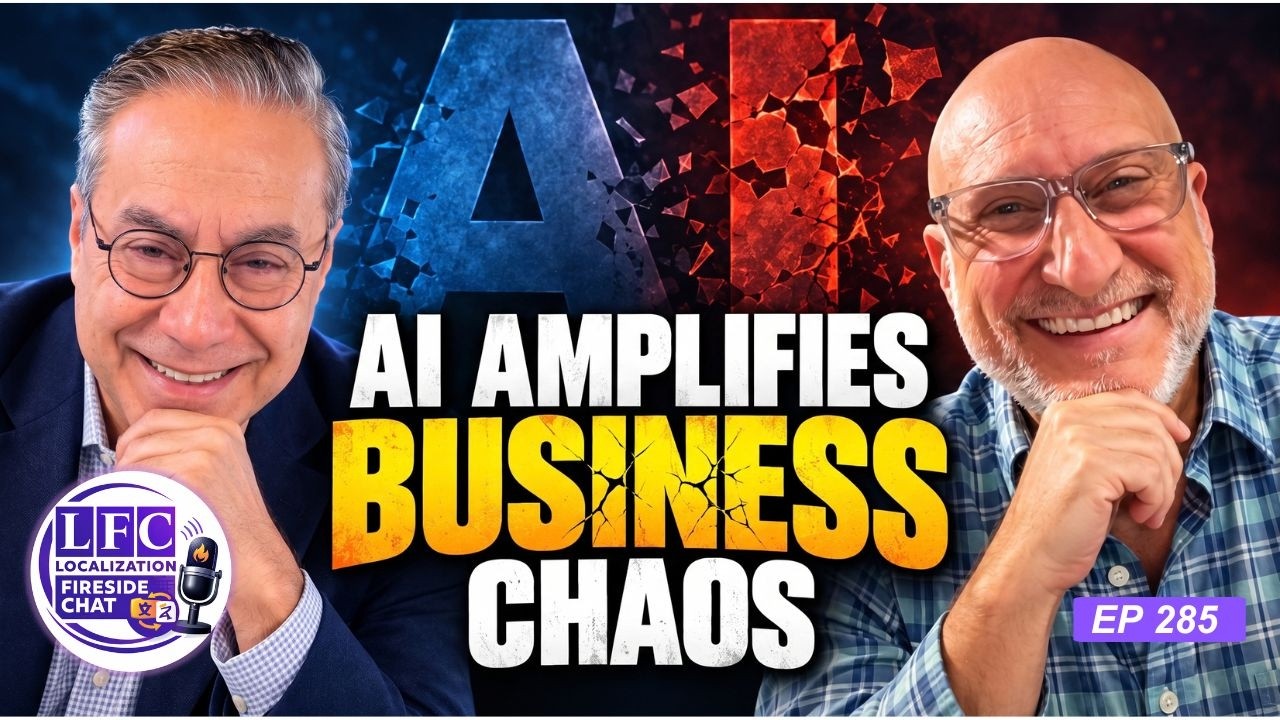
The most quotable moment in episode 285 lands in the conversation about technology and why so many AI rollouts make things faster and messier at the same time. Daniel is direct about it: AI is a great amplifier of what already exists in the business. If workflows are undocumented, if there are multiple sources of truth, if decision paths are inconsistent, then AI replicates and scales the chaos. The organizations that benefit are the ones that arrived at the deployment with a single source of truth, integrated systems, and a clear answer to the question of who acts on the output and how it gets checked, challenged, and improved. For localization leaders specifically, this is not abstract. Every TMS integration, every machine translation engine, every AI-assisted review workflow sits on top of the operating conditions that were already in place. If those conditions are sound, the technology extends them. If they are not, the technology exposes them. Daniel also addresses the human side of AI resistance directly, acknowledging that a frontline team member will quietly sabotage a project if they are fearful and cannot see where they fit in what comes next. The leader’s job is not to make a promise about job security five years out. It is to help that person understand what they can control, how the new skills improve their value, and what governance, administration, and change management roles are opening up that did not exist before.
This is a conversation worth sitting with if you lead a team that is being asked to do more with the same resources, deploy technology into an operation that was not built for it, or close the gap between what your strategy says and what your dashboards are actually showing. You can Watch on YouTube or Listen on Simplecast and choose the format that fits your week.


Leave a Reply