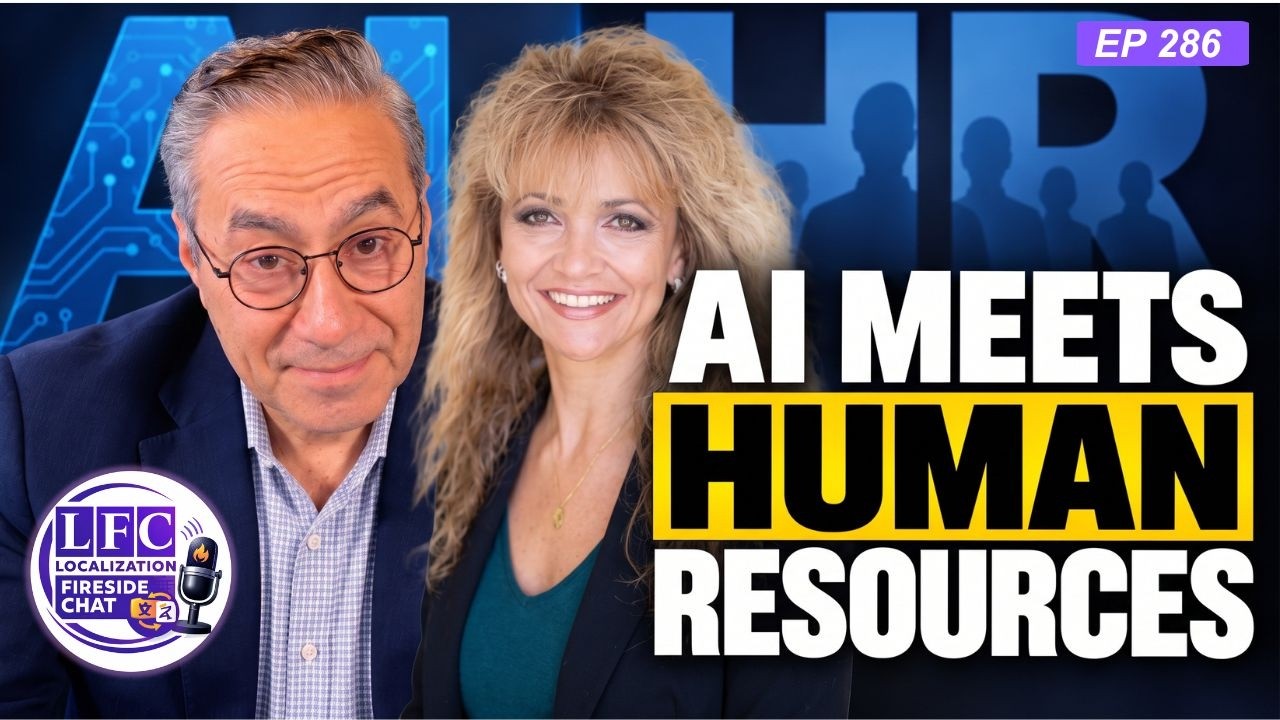
The Fractional HR Moment SMBs Keep Missing
Laura Frederickson spent nearly thirty years inside corporate HR, most recently across a complex multi-industry organization where she was simultaneously managing food and beverage, facilities, fitness operations, and activities under one roof. That breadth, she explains, was actually the training ground for what she does now at AureviaHR: helping small and medium-sized businesses build people strategy from the ground up, without the overhead of a full-time HR department. The conversation opens with a candid admission that the decision to leave corporate was not impulsive. It took years. She was enamored with her last organization, she says, and still roots for them. But when the appetite for AI exploration did not match her own, she recognized she had to go where that curiosity could actually lead somewhere. What she has built since is a fractional model that puts enterprise-grade HR thinking inside companies that genuinely need it and almost never get it. Robin draws a direct parallel to his own trajectory leaving corporate to build N49 Network, and the two settle quickly into the honest rhythm that characterizes this episode: two operators who left large organizations to go do the thing they actually wanted to do, comparing notes.
Where AI in HR Actually Falls Apart
The sharpest part of this conversation arrives when Robin asks about the gap between what AI vendors promise and what a forty-person company can realistically absorb. Laura’s answer is direct. The companies that struggle are the ones treating AI adoption as a top-down mandate rather than a readiness question. She asks every prospective client the same thing first: what are you trying to solve for? That framing matters because, as she points out, most organizations do not fail at picking a tool. They fail at preparing their people for what the tool means. Fear of the unknown spreads fast when employees cannot answer basic questions about who is making decisions about their employment. The fix, she argues, is not a better demo or a more polished vendor pitch. It is communication, which she says accounts for ninety-five percent of every organizational problem she has ever encountered. The IKEA example she raises is worth sitting with. Rather than eliminating thousands of customer service roles when their AI implementation took over those functions, IKEA identified what the tool could not do, upskilled the affected employees into interior design consulting, and created an entirely new revenue stream that had not previously existed. Laura uses it not as a feel-good story but as a strategic argument: the companies that will win are the ones that audit the output, protect tribal knowledge, and ask whether the IKEA moment was missed before they reach for the layoff memo. She is equally clear-eyed about bias in AI systems, comparing unmonitored deployment to putting wood on a table saw and walking away. The cabinet does not build itself. Someone has to watch the cuts.
The Inflection Point Founders Keep Missing
Robin pushes Laura on something practical near the close: when does a founder’s instinct stop being enough? Her answer resists a simple headcount threshold. Volume matters, she says, but so does industry, regulatory exposure, and whether growth is already happening or just being contemplated. The more useful signal is whether the person running the business has stopped running the business and started being it. That distinction, between operating inside the machine versus steering it, is where she sees the clearest need for outside HR support. She also flags something that tends to get overlooked in early-stage companies: what happens to the employees who stay after a reduction. Distraction, resume-updating, eroded trust. The cost of a poorly handled people decision does not end with the people who leave. It extends to everyone who watched it happen. Her one-week recommendation for any founder listening is straightforward. Map where you intend to go in the next twelve months, identify the skill and headcount gaps standing between you and that destination, and start there. Not with a platform. Not with a policy manual. With a direction.
Episode 286 of the Localization Fireside Chat runs the full length of Laura’s thinking, including her take on cross-country HR systems for globally distributed teams, why HR language reads like it was written by lawyers (it usually was), and what it means to illuminate a path rather than just hand someone a roadmap. You can Watch on YouTube or Listen on Simplecast and find Laura at AureviaHR.com if this conversation surfaces something your organization needs to solve.


Leave a Reply