From Primary School Teacher to Finance Headhunter
Tom Hunter did not plan a career in finance recruitment. He trained as a teacher, spent time in London classrooms managing the impossible spread between gifted kids and kids who had not eaten breakfast, and walked away inside the first year, part of what he notes is a fifty to sixty percent teacher dropout rate. What came next was a Google search for how to make money without a degree and a few roleplay interviews he describes, with some candour, as making a complete mess of himself. That origin story matters because it shaped how Tom recruits now. Without a finance background or even a strong Excel skill set, he had to learn the industry by listening, by doing the reps, and by genuinely trying to understand what a good finance person actually does for a business. Nine years and roughly 31,000 LinkedIn followers later, the outsider vantage point has become the edge. He asks questions a credentialed recruiter might assume they already know the answer to, and that habit surfaces things others miss.
What the First Finance Hire Decision Actually Looks Like
The most practically useful part of this conversation is Tom’s breakdown of the decision tree founders face when they think they need a CFO. His research across roughly a thousand finance hires in the Australian startup ecosystem found that seventy percent of first finance hires are below CFO level, and he will tell a prospective client that directly even when it costs him a fee. For a founder-operated business crossing the five to twenty million dollar range, the honest answer is usually a financial controller or VP of Finance, someone who can put repeatable process in place and create the financial visibility the business has been missing. A full CFO makes sense earlier than expected in specific contexts, particularly FinTech companies where finance is the product, or deep tech businesses with significant hardware components, because those roles carry a heavy strategic layer from the start. The fractional model fills the gap in between, and Tom is candid that he steers people toward trusted fractional operators when the scope does not warrant a full search, because the credibility he builds doing that is worth more than the fee he does not charge. He also shared a cautionary case about a founder who conflated GST with ARR and nearly collapsed a capital raise as a result. The cost of getting a VCFO in for a few hours would have been negligible against the millions that walked out the door when the lead investor pulled out.
AI Is Not a Threat to the CFO. It Is a Test of the CFO.
Tom’s perspective on AI and finance is grounded in what he is actually seeing rather than what sounds good in a panel discussion. He described a mining tech company sitting at ten to fifteen million in revenue where the CFO has automated so much of the workflow that he does not anticipate needing to hire below himself even at five to ten times current scale. He also described using Claude with an MCP connection to his CRM to generate candidate reports in under a minute that used to take hours, running outreach campaigns by scraping LinkedIn and enriching emails automatically, and building content pipelines that let him post nine or ten times a week without spending a Sunday writing. His honest warning is for finance professionals in large corporates who have spent fifteen or twenty years in a highly repetitive role and have not yet started re-skilling. That group, he says, is the most exposed, not CFOs. The CFO who understands that their value is now the commercial and human layer, the storytelling, the stakeholder translation, the yes-but-how rather than the flat no, is not threatened by AI at all. The person whose entire value was the repeatable task that AI now does in seconds is in a different position entirely.
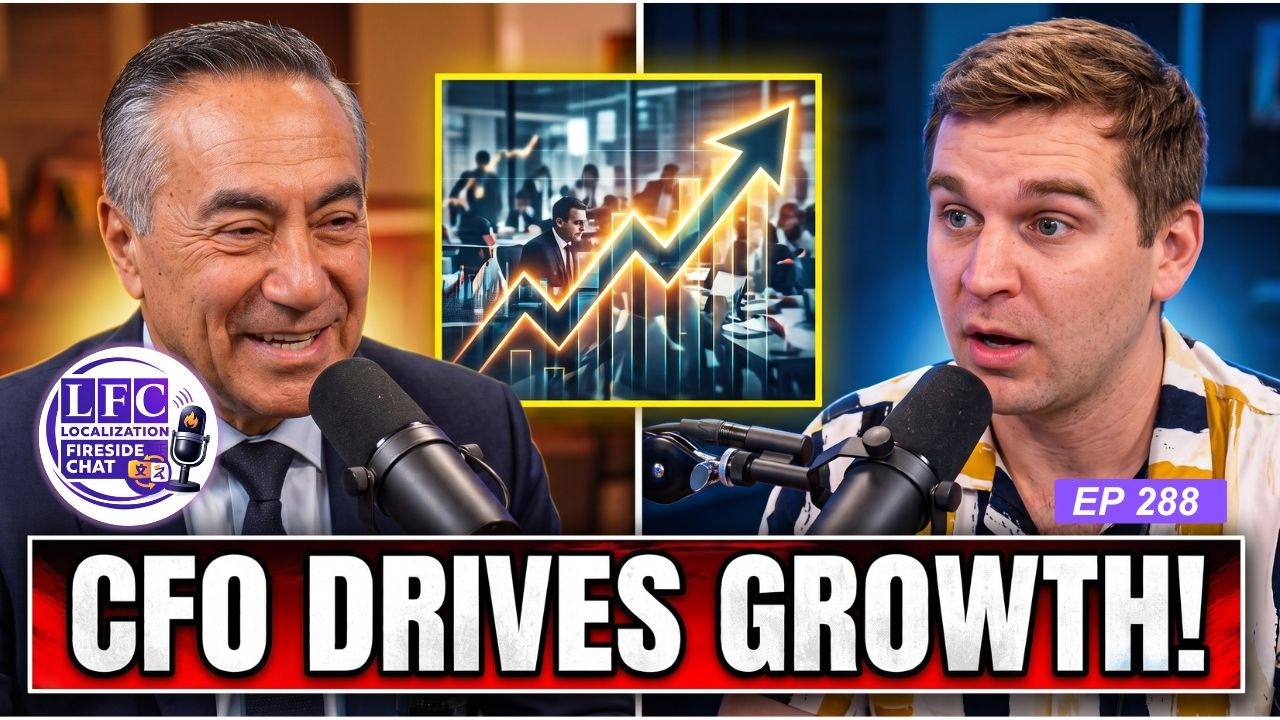
Episode 288 of the Localization Fireside Chat is a practical and honest conversation about the finance hire decision, the CFO role that is actually emerging inside modern startups, and how one recruiter rebuilt his entire workflow around AI without losing the human judgment that makes placements stick. You can Watch on YouTube or Listen on Simplecast and choose whichever format fits where you are today.


Leave a Reply