The Founding Frustration That Still Hasn’t Gone Away
Shaheen Samavati built VeraContent out of a very specific kind of irritation. She was on the client side, managing web translations for multinational companies, watching technically correct content land completely flat because nobody involved in the process actually cared whether it sounded human. When she tells that story now, she is not angry about it, but she is still clear-eyed. The gap between what the localization industry promised and what it delivered was real enough that she left to build something better. That founding frustration, she admitted in this conversation, has not fully disappeared from the market. The industry got faster and cheaper, but the quality ceiling stayed roughly where it was. What changed is that AI made the ceiling harder to see, and that is the more interesting problem.
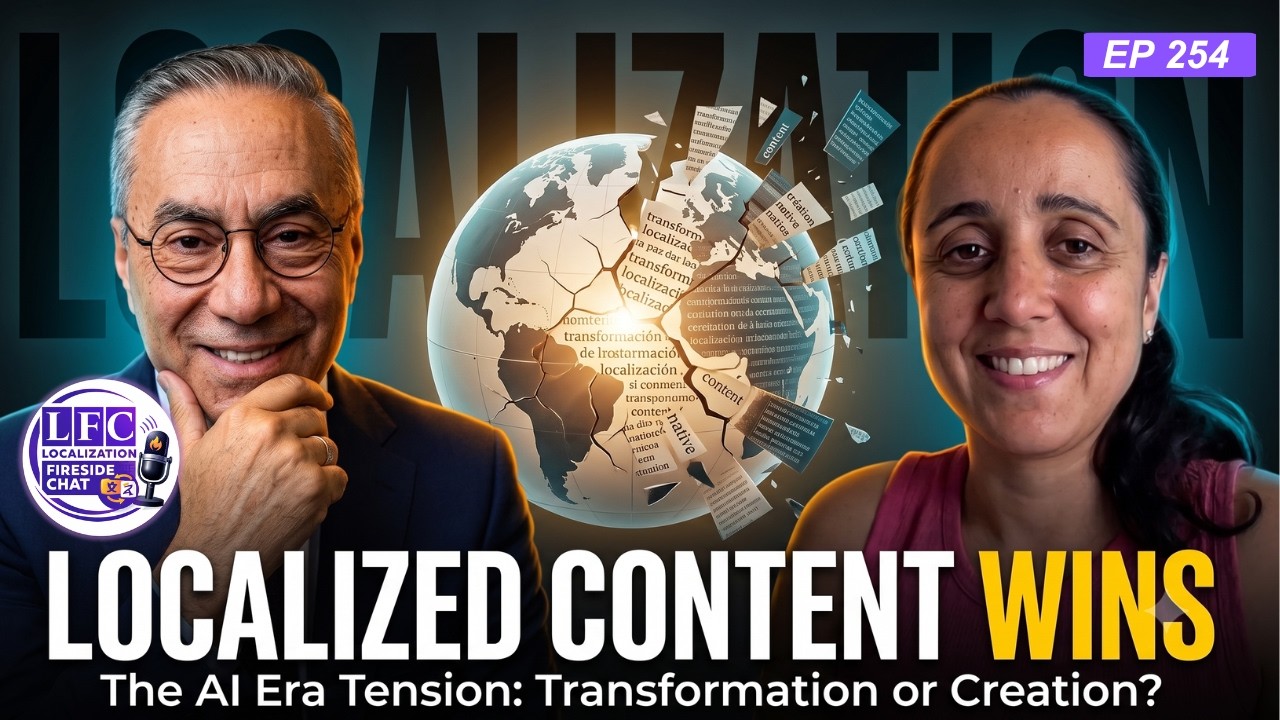
Robin pushed her on a line she dropped in their first conversation back in October 2024, that there is a meaningful difference between transforming content from one language to another and creating original content in the target language. Two years later, with AI now generating passable multilingual copy at near-zero cost, the question is whether that distinction has sharpened or collapsed. Shaheen’s answer was honest: AI makes content creation easier and faster, but it makes bad content easier and faster too. The editorial judgment about what should be in the content, the quality of the prompt, the person who understands the target market well enough to catch what the model missed, none of that has been automated. A great writer using AI can do better work at larger scale. But you still need the great writer.
When the Right Call Is to Stop Translating Entirely
One of the more concrete moments in this conversation came when Shaheen described a real estate client whose content VeraContent was supposed to localize across European markets. The regulations governing landlords differ so significantly country to country that direct translation was essentially useless. The team had to research the topic fresh for each market, find local angles, and rewrite from scratch. The client was not surprised when told. The cost difference was roughly thirty percent more than a straight translation pass, and Shaheen framed it simply: it was worth it for them.
That example captures something Robin has been saying across two hundred and fifty-four episodes of this podcast, which is that treating Europe as a single homogeneous market is not just a creative mistake, it is a commercial one. Five hundred million people, a dozen primary languages, and wildly different regulatory, cultural, and consumer contexts. Shaheen’s team now manages separate social media accounts for the Netherlands and Belgium for one client, not because it is efficient, but because the local nuances around product availability and community conversation are different enough to warrant it. The question of whether to localize or create natively is not philosophical. It is a budget decision that should be made with full information about what you are actually selling and who you are selling it to.
What Localization Needs to Borrow from Journalism
Robin raised something that has been nagging at him across many recent conversations on this channel, which is that the word localization is being stretched so thin it is starting to lose meaning. A post-edited machine translation pass gets called localization. A full cultural transformation of content for a specific demographic also gets called localization. Those are not the same thing, and the industry’s reluctance to say so out loud has cost it credibility with buyers who have started to notice.
Shaheen’s response came from her journalism background, which has always been the anchor of how VeraContent operates. A good journalist does not have to be an expert in every topic they cover. They have to be curious, they have to ask the right people the right questions, and they have to stay on the story long enough to actually understand it. That same discipline applied to multilingual content means the linguist on a project is not a dispatcher receiving files, but someone with direct client contact, ideally through a shared channel, who genuinely learns the brand over time. It is not the most scalable model. Shaheen said that plainly. But for clients who are investing in content that is supposed to represent them at their best, scalability is not the primary variable.
The broader strategic shift she described at VeraContent reflects where smart boutique agencies are heading right now. Content volume as a service is under real pressure from AI. What is not under pressure is strategy, editorial oversight, SEO guidance, local community management, and the judgment calls that determine whether a piece of content actually works in a given market. Those are growing. The agencies that had already moved up the value chain before the AI wave hit are finding they have more to offer, not less.
This is a conversation worth sitting with if you work in localization, content marketing, or global brand strategy and you have been feeling the ground shift under your existing assumptions. You can Watch on YouTube or Listen on Simplecast and choose the format that fits your morning.


Leave a Reply